The finest fizz in the world is just 45 minutes from Paris. Here's how to arrive like an insider — not a tourist.
Few day trips from Paris match the elegance of a journey into the Champagne region. The rolling chalk hills of the Montagne de Reims, the legendary crayères cellars carved beneath Reims and Épernay, the ritual of a perfectly poured flûte — it is an experience that rewards careful planning.
Done well, a day in Champagne leaves you with a genuine understanding of what makes this sparkling wine extraordinary. Done hastily — with a generic tour group and no advance booking — you'll spend more time queuing than tasting.
Here is everything you need to know, from train times to tasting etiquette, and why more discerning travellers choose to go with a private guide.
Reims is the natural base for a Champagne day trip. Direct TGV services from Paris Gare de l'Est reach Reims in under 45 minutes — one of the most civilised commutes imaginable. Trains depart frequently throughout the day, and a return ticket typically costs between €25–€60 depending on how far in advance you book.
Book your outward train for around 8:30am to maximise time in the region. An evening departure around 7pm gives you a full, unhurried day without any rushed farewells.
Alternatively, Épernay — the so-called "capital of Champagne" and home to the famous Avenue de Champagne — is accessible by train from Paris Est, with a journey of around 1h20. Many visitors combine both cities in a single day with private transport. See our article comparing the two towns. click here
| Route | Journey time | Approx. fare | Best for |
|---|---|---|---|
| Paris Est → Reims (TGV) | 44 min | €25–€60 | Speed & grandes maisons |
| Paris Est → Épernay | ~1h20 | €20–€45 | Avenue de Champagne |
| Private chauffeur from Paris | ~1h30 | On request | Full flexibility, village producers |

The region's most celebrated maisons open their cellars to visitors, but the experience varies enormously. Some offer polished but impersonal visits — useful for orientation. Others offer intimate access to winemakers, library vintages, and private salons that never appear on any public booking page.
In Champagne, the best experiences are never advertised. They are earned — over years of visits, shared glasses, and the kind of trust that only comes with time. The partnerships below are not available to the public, not listed on any booking platform, and not something you will find with any other tour operator. We are rather proud of that.
One of the Montagne de Reims' most cherished addresses — and one of its most discreet. Pierre Paillard receives Decanter Tours guests with the kind of generosity that simply cannot be booked online. Past visits have included a candlelit picnic lunch set among the vines, with a table dressed for a dinner party in the middle of the grand cru. It is the sort of thing you describe to friends and watch them refuse to believe.
The oldest wine house in Champagne deserves more than a standard cellar tour — and with Decanter Tours, it gets one. Our guests are received by Gosset's technical director, whose knowledge of the house's history, viticulture, and winemaking philosophy transforms a tasting into a genuine masterclass. This is not a public offer. It is a conversation between professionals, and our guests are invited in.
We are not being coy for effect — we genuinely cannot name this one. What we can tell you is that it is one of the most recognised names in Champagne, that their private château is among the most beautiful properties in the region, and that Decanter Tours has exclusive access for private group events. It seats a larger party in considerable style. If you are planning something memorable for a group, ask us — and we will tell you more in confidence.
The chalk cellars — or crayères — beneath Reims and Épernay are as impressive as any cathedral. Many date back to Roman times and maintain a constant temperature of 10–12°C, ideal for slow ageing. A great cellar visit is not just a tasting: it is a lesson in geology, history, and craft.
Public tours typically last 60–90 minutes and end with a tasting of one or two cuvées. A private visit, arranged through a specialist like Decanter Tours, can include vertical tastings of multiple vintages, a walk through restricted areas of the cellar, and a conversation with the chef de cave or winemaker.
This is the question every first-time visitor asks. Both options are valid — but they deliver very different days.
| What you get | Solo / Independent | With Decanter Tours |
|---|---|---|
| Access to grande maison cellars | Public tours, if available | ✓ Priority access, often private |
| Grower-producer visits | ✗ Rarely possible | ✓ Our speciality |
| Library vintage tastings | ✗ Not on public menus | ✓ Via our house contacts |
| Winemaker introductions | ✗ Rarely offered | ✓ Arranged in advance |
| Bespoke itinerary | ✗ Fixed schedules | ✓ Built around your interests |
| Transport & logistics | Self-managed | ✓ Fully handled |
| Expert interpretation | Audio guides / signage | ✓ WSET-qualified guide throughout |
Seen enough to know you want more? Our Champagne specialists are ready to build your perfect day trip — just tell us your dates.
Start planningDecanter Tours has spent years cultivating relationships across the Champagne region — not just with the famous grand marques, but with the small family estates and innovative grower-producers whose wines rarely leave the region. These are not connections you can replicate by booking online the night before.
Our guides are wine-educated specialists who understand what a serious enthusiast wants: depth, context, and access. We do not do conveyor-belt tours. We do not rush cellars. We take pride in curating days that leave our guests genuinely changed in their understanding and appreciation of Champagne.
Some guides know Champagne from a textbook. Julien knows it the way only a native can — through the streets of Reims he grew up in, the cellars he has spent a lifetime exploring, and the stories that never quite make it into the guidebooks.
After years of travelling and collecting experiences around the world, he came back to the region he loves most — not because there was nowhere left to go, but because there is nowhere quite like it. His days are built around history, anecdotes, and the firm belief that a great Champagne visit should above all be fun. Expect to leave with a full glass, a head full of stories, and very possibly a new favourite producer.
Julien meets you off the train and you depart immediately — no waiting, no fuss.
A family-run grand cru estate on the Côte des Blancs, founded in 1960 and now in its second generation. You'll be received by a family member — the kind of intimate visit that sets the tone for the whole day.
The UNESCO-listed birthplace of Champagne — and the resting place of Dom Pérignon himself. Julien brings the history to life in a way no audio guide ever could.
We know where the locals eat. A table will be reserved for you at a restaurant chosen for the occasion.
A tour of Champagne's most iconic cellars, followed by a commented tasting of two signature cuvées. Grand in scale, and genuinely illuminating.
A stroll along the UNESCO-listed avenue where the great houses built their empires — and where Julien's anecdotes are, frankly, better than any plaque.
A masterpiece of Gothic architecture and the coronation church of French kings for eight centuries. Not to be rushed, and not to be missed.
Time for a final glass, a little shopping, or both. The station is a 10–15 minute walk, with a 7:15pm train back to Paris.
"We'd visited Champagne before on our own and enjoyed it — but this was on another level entirely. Our guide arranged a private tasting in a cellar that wasn't even open to the public. We left with bottles we couldn't have found anywhere else."
"The grower-producer visit was the highlight of our entire trip to France. Our guide clearly had a real relationship with the family — we were welcomed like old friends and tasted wines that simply don't appear on any wine list."
"I organised a surprise anniversary trip and Decanter Tours took care of every detail, including a magnificent lunch at a restaurant I'd never have found alone. An absolutely flawless day."
Dress comfortably but smartly. Cellar temperatures stay around 10–12°C year-round — bring a light layer even in summer. Smart-casual dress is appreciated at the prestige houses.
Eat before you start tasting. The region has excellent restaurants, from casual brasseries to Michelin-starred dining. Ask us for current recommendations — we know where the locals eat.
Plan to buy. There is nothing quite like bringing home a bottle of Champagne you tasted in the cellar it was made. Many growers offer prices you will simply not find elsewhere.
Book ahead — always. Even the most accessible grande maison houses can be full weeks in advance, particularly in summer and during harvest. Private experiences require even more lead time. We manage all of this for you.
Still have questions? Our team is happy to talk through any aspect of your trip — no obligation, no pressure.
Talk to our teamReims, the main city of the Champagne region, is just 44 minutes from Paris by TGV from Gare de l'Est. Épernay — home to the famous Avenue de Champagne — is around 1h20 by train. By private car or chauffeur, both are under two hours, with the flexibility to stop at village producers along the way.
Yes — always. The most sought-after experiences at houses like Ruinart, Taittinger, and Krug fill up weeks ahead, particularly in summer and during harvest (September–October). Private visits arranged through Decanter Tours are secured well in advance as part of your itinerary, so you never arrive to find a tour fully booked.
In theory, yes — but in practice it is very difficult. Many small family estates do not have public-facing booking systems, conduct visits by appointment only, and prioritise visitors with whom they have an established relationship. This is precisely where Decanter Tours adds the most value: our longstanding contacts in the region open doors that are simply closed to independent visitors.
The region is beautiful year-round, but late spring (May–June) offers lush green vineyards and pleasant temperatures, while harvest season (late September–October) is the most atmospheric time to visit — with the added bonus of seeing the winemaking process first-hand. Winter visits are quieter and more intimate, with a different kind of magic in the chalk cellars.
Every itinerary is bespoke, so pricing depends on the experiences you choose, group size, and level of access required. Contact us with your dates and interests and we will prepare a tailored proposal. Most clients find the cost is substantially offset by the depth of access and the elimination of any logistical stress.
Absolutely. Our guides are skilled at calibrating their approach to the group — whether you are a Master of Wine or someone who simply loves a good glass of fizz. The Champagne region is as much about landscape, architecture, and history as it is about wine, and a well-designed day trip has something extraordinary to offer everyone.
Yes. We can organise private chauffeur transfers from central Paris, arrange first-class train tickets, or meet you at Reims station — whichever works best for your group. We handle all logistics so you can focus entirely on the experience.
Whether you are planning your first visit to the region or looking to go deeper than you ever have before, Decanter Tours is here to make it exceptional. Choose how you'd like to get started:
AT A GLANCE
Reims is a grand cathedral city with world-famous Champagne houses and rich history, ideal for culture lovers and luxury travellers. Épernay is the intimate heart of the Champagne region, home to the legendary Avenue de Champagne and a gateway to grower-producer vineyards. The good news? You don't have to choose — Decanter Tours can craft an itinerary that captures the best of both.
The Champagne region of northeast France is one of the world's most celebrated wine destinations, and at its heart lie two remarkable cities: Reims and Épernay. Both lay claim to the title of Champagne capital — and both are right. But they offer distinctly different experiences, and choosing the right base can make all the difference to your tour.
In this guide, we'll walk you through what makes each city special, who each one suits best, where to stay, and how Decanter Tours can turn your Champagne dream into an unforgettable reality.
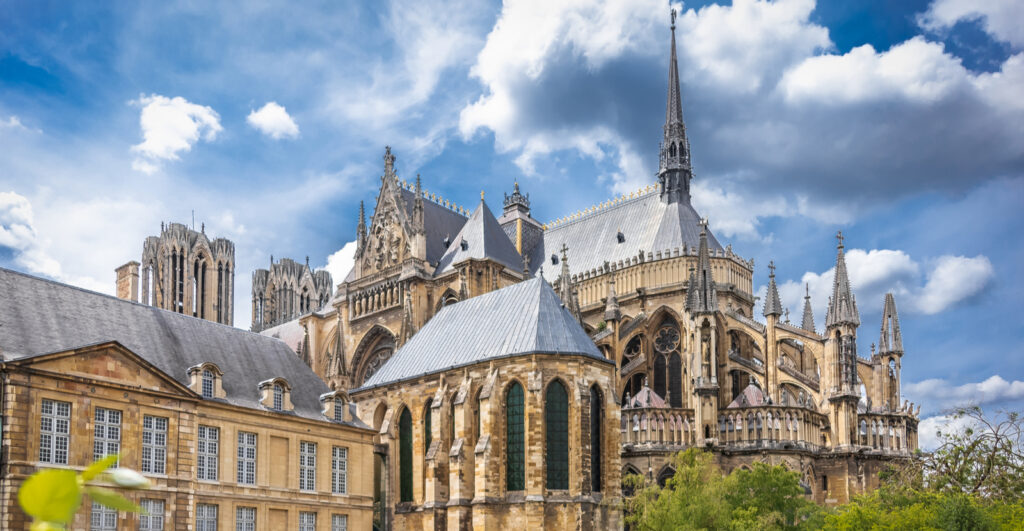
Reims (pronounced "Rance") is a city of magnificent proportions. It was the coronation city of French kings for over a millennium, and that regal grandeur is still palpable today. The soaring Cathédrale Notre-Dame de Reims, a UNESCO World Heritage Site, dominates the skyline and sets the tone for a city that pairs world-class fizz with world-class culture.
With a population of around 180,000, Reims has the infrastructure of a proper city — excellent restaurants, boutique hotels, galleries, and a vibrant local scene beyond the cellars.
Reims is home to some of the most iconic names in Champagne. The great houses — known as the Grandes Marques — have constructed an extraordinary network of chalk cellars (crayères) beneath the city streets, many of which date back to Roman times.
Houses you can visit in Reims include:
These are bucket-list cellar visits — part wine education, part architectural wonder.
Domaine Les Crayères ★★★★★ — This is arguably the most prestigious address in the entire Champagne region. A magnificent Belle Époque château set in private parkland, Domaine Les Crayères is the benchmark for Champagne luxury. Its two-Michelin-starred restaurant Le Parc is a destination in itself, and the cellar collection is exceptional. Decanter Tours can arrange exclusive access and bespoke dining experiences here.
La Résidence Eisenhower ★★★★ — 17 Boulevard Lundy, 51100 Reims. A superb choice for those who want character, comfort, and a story to tell. This handsome property housed General Eisenhower during World War II and has been sensitively transformed into an elegant boutique hotel. Ideally located in the heart of Reims, the atmosphere is personal and refined — an excellent base for exploring the city's great Champagne houses.
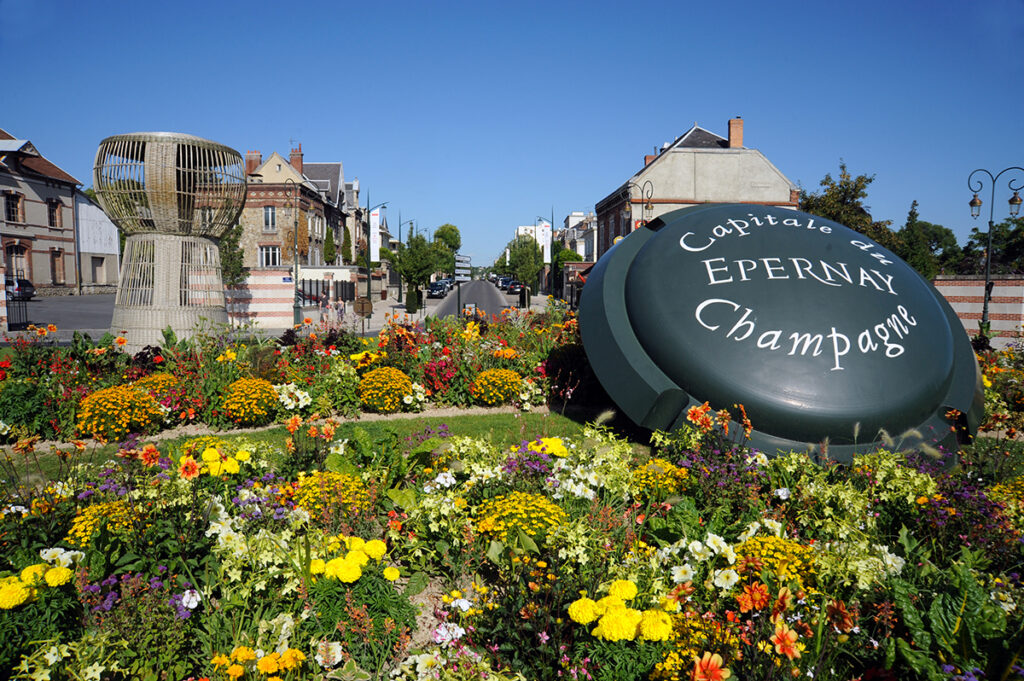
If Reims is Champagne's imperial capital, Épernay is its beating heart. This smaller town of around 25,000 people is home to the most famous street in the wine world: the Avenue de Champagne.
Lined with palatial 19th-century mansions — the headquarters of houses such as Moët & Chandon, Pol Roger, Perrier-Jouët, and de Castellane — this boulevard is estimated to have over 200 million bottles ageing beneath its surface. Walking it feels like strolling through wine history.
Épernay's real secret weapon is its position at the intersection of three of Champagne's most celebrated sub-regions: the Montagne de Reims, the Vallée de la Marne, and the Côte des Blancs. From Épernay, you're perfectly placed to explore the village producers — the récoltants-manipulants — crafting some of the most exciting, terroir-driven Champagnes in the world.
This is where serious wine lovers find their paradise: small-scale, family-run estates offering personal tours, intimate tastings, and wines you simply can't find in a supermarket.
Royal Champagne Hotel & Spa ★★★★★ — Perched dramatically above the vineyards in the village of Champillon, just minutes from Épernay, the Royal Champagne is one of the region's most celebrated luxury addresses. With breathtaking panoramic views over the Marne valley, a renowned spa, and exceptional cuisine, it is a destination in its own right. The perfect retreat for those who want to be immersed in the vines themselves.
La Villa Eugène ★★★★ — Set in a beautifully restored 19th-century mansion in the heart of Épernay, La Villa Eugène offers elegant, individually decorated rooms and a warm, personal welcome. Surrounded by its own vines and a tranquil garden, it perfectly captures the charm and intimacy that makes Épernay so special.
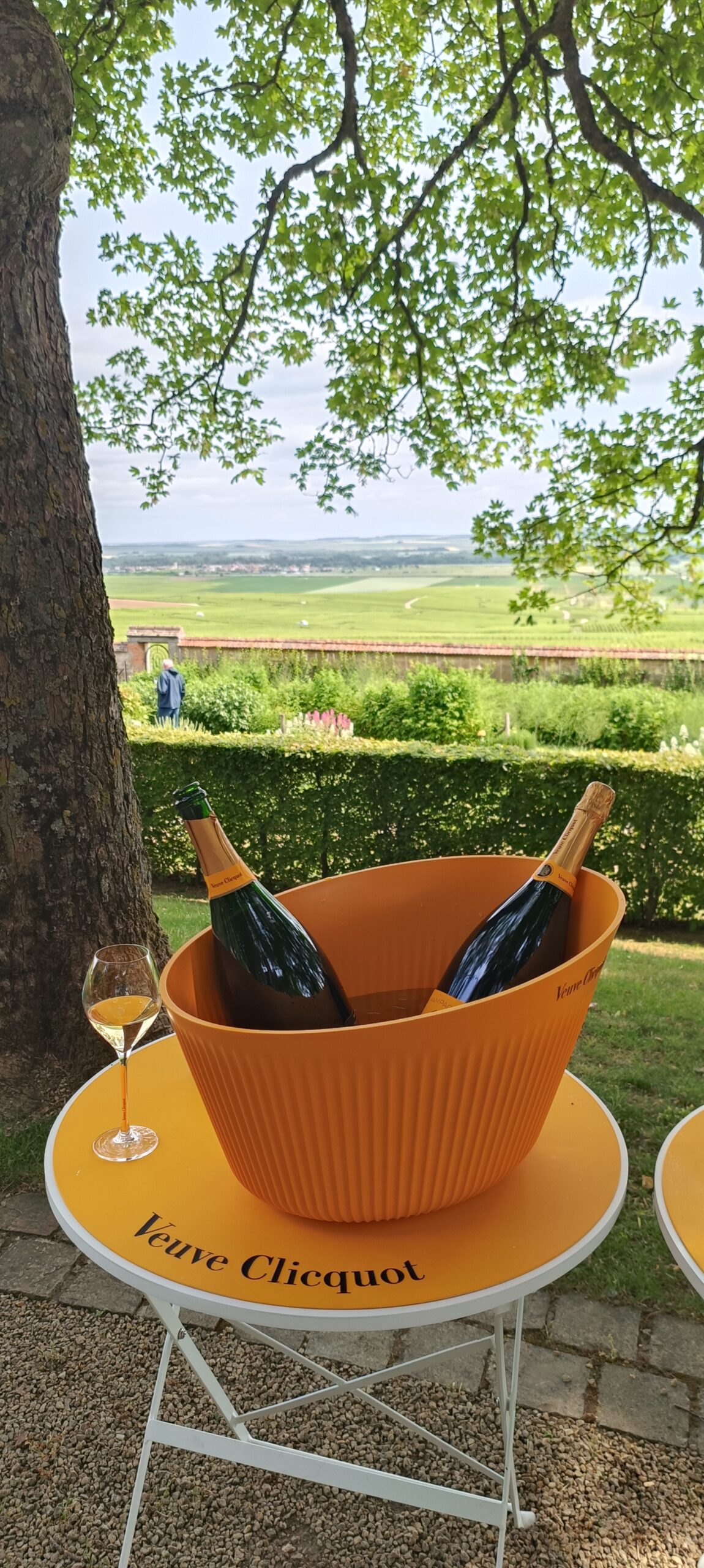
| Reims | Épernay | |
|---|---|---|
| City Vibe | Grand & cosmopolitan | Intimate & village-like |
| Best For | Culture, history, luxury | Wine depth, vineyards, romance |
| Champagne Style | Grande Marques & iconic houses | Grower producers & terroir |
| Cellar Highlight | Roman crayères | Avenue de Champagne |
| Dining | Michelin-starred & fine dining | Bistros & local markets |
| Hotels | Domaine Les Crayères, La Résidence Eisenhower | Royal Champagne Hotel & Spa, La Villa Eugène |
✦ READY TO PLAN YOUR CHAMPAGNE TOUR?
Decanter Tours specialises in bespoke Champagne experiences — from private cellar visits to vineyard picnics with grower producers. Let us handle every detail.
Book Your Champagne Tour with Decanter Tours Today
The best news for Champagne lovers is that Reims and Épernay are only 26 kilometres apart — about 25 minutes by car or train. A well-designed tour can effortlessly incorporate the highlights of both cities, giving you the grandeur of Reims and the intimacy of Épernay in a single, seamless itinerary.
A typical Decanter Tours Champagne itinerary might look something like this:
Every tour is tailored to your preferences, pace, and palate.
The most prestigious Champagne houses — particularly Ruinart, Krug, and Salon — require advance reservations, sometimes months ahead. Decanter Tours handles all bookings on your behalf, ensuring access to visits that independent travellers often cannot secure.
✦ EXCLUSIVE ACCESS, GUARANTEED
Decanter Tours has established relationships with Champagne's finest houses and grower producers. We secure private visits, priority access, and exclusive tastings that are simply not available to walk-in guests.
Contact Decanter Tours to Start Planning Your Bespoke Champagne Experience
If this is your first visit to the Champagne region, Reims offers a spectacular introduction: iconic houses, UNESCO-listed architecture, and world-class dining all in one city. That said, many first-timers find Épernay's Avenue de Champagne the single most memorable experience of their trip. Decanter Tours recommends a combined itinerary whenever time allows.
A minimum of three nights allows you to do the region justice. Four to five nights lets you explore both Reims and Épernay comfortably, with time for vineyard drives and village visits. Decanter Tours offers itineraries from weekend breaks to week-long deep dives.
Some smaller grower-producers welcome walk-ins, particularly in quieter months. However, the major houses require advance reservations — and the most exclusive experiences are only available through established contacts. Decanter Tours handles all logistics so you can simply arrive and enjoy.
Grower Champagnes are produced by the same family who grows the grapes, rather than large négociant houses who blend from across the region. They tend to be more terroir-expressive and often extraordinary in quality. The villages around Épernay — particularly in the Côte des Blancs and Vallée de la Marne — are the best places to discover them.
Absolutely. The countryside is beautiful, the towns are welcoming, and there are plenty of non-wine activities — from cycling vineyard routes to visiting WWI memorials and museums. Decanter Tours can tailor itineraries for families or mixed groups.
Domaine Les Crayères is a five-star château — the pinnacle of Champagne luxury, with Michelin-starred dining and exceptional service. La Résidence Eisenhower is a four-star boutique hotel in the heart of Reims with wonderful historic character. Near Épernay, the Royal Champagne Hotel & Spa offers stunning vineyard views and a world-class spa, while La Villa Eugène provides intimate, elegant charm in a restored mansion. Each suits a different style of traveller — Decanter Tours can advise on the best fit for you.
✦ BEGIN YOUR CHAMPAGNE JOURNEY WITH DECANTER TOURS
Whether your heart is set on Reims, Épernay, or an itinerary that captures both, Decanter Tours is here to craft a Champagne experience as individual as the wines themselves.
Private cellar visits | Expert guides | Luxury accommodation | Bespoke itineraries
Planning your first French wine tour from Paris? You're facing one of the most delightful dilemmas in wine travel: choosing between the sparkling glamour of Champagne and the rustic elegance of Burgundy. Both regions offer extraordinary experiences, but they cater to different tastes, timeframes, and wine preferences.
Let me help you decide which region deserves your first visit — or why you might want to experience both.
Accessibility is unbeatable. Located just 90 minutes from Paris, Champagne is perfect for day trips or weekend getaways. The towns of Reims and Épernay sit conveniently along train routes, making a Champagne tour entirely feasible without renting a car.
The prestige factor is real. Walking through the centuries-old chalk cellars of Moët & Chandon, Veuve Clicquot, or Taittinger delivers an incomparable sense of history and luxury. These aren't just wineries — they're monuments to French heritage and craftsmanship.
It's universally loved. Even people who claim they "don't like wine" usually enjoy Champagne. The crisp bubbles, the celebratory atmosphere, and the approachable nature of sparkling wine make it perfect for mixed groups or wine novices.
The experience is structured and polished. Major Champagne houses offer slick, professional tours with multiple language options. You'll learn about the méthode champenoise, explore dramatic underground tunnels carved by Romans, and taste vintage cuvées in elegant tasting rooms.
A typical day in Champagne includes visiting 2–3 prestigious houses, lunch in a charming bistro in Épernay or Reims, and perhaps a stop at a smaller grower-producer for a more personal experience. The landscape of rolling vineyards dotted with windmills is Instagram-ready, and the Champagne Route (Route Touristique du Champagne) offers picturesque drives through villages like Hautvillers, where Dom Pérignon perfected his craft.

The wine is simply extraordinary. Burgundy produces some of the world's most coveted and complex wines. If you're a serious wine enthusiast, tasting a Grand Cru Pinot Noir from Gevrey-Chambertin or a white Burgundy from Meursault is a pilgrimage, not just a tour.
It's authentically intimate. Unlike Champagne's grand houses, Burgundy revolves around small family estates where the winemaker might personally pour your wine in their centuries-old cellar. These encounters feel genuine, warm, and deeply educational.
The diversity is remarkable. Burgundy offers both world-class reds (Pinot Noir) and whites (Chardonnay) across a patchwork of climats — tiny vineyard plots with distinct personalities. A Burgundy wine tour from Paris introduces you to the concept of terroir better than anywhere else on Earth.
Food reaches another level. Burgundian cuisine is legendary: coq au vin, boeuf bourguignon, escargots, époisses cheese, and pain d'épices. The region's restaurants and bistros take food-and-wine pairing seriously, making every meal memorable.
The scenery is storybook-perfect. Medieval villages like Beaune, Pommard, and Vougeot feature cobblestone streets, Gothic architecture, and vine-covered hillsides. The Hospices de Beaune, with its colorful tiled roof, is one of France's most photographed buildings.
A proper Burgundy tour spans the Côte de Nuits and Côte de Beaune, with stops at family domaines, perhaps a visit to a négociant like Louis Jadot, and lunch at a Michelin-starred restaurant or countryside auberge. You'll learn to appreciate subtle differences between neighboring villages and understand why a few meters can transform a wine's character.
The region requires more time — ideally 2–3 days to fully appreciate — but rewards patience with unforgettable tastings and genuine connections with passionate winemakers.
| Feature | Champagne | Burgundy |
|---|---|---|
| Distance from Paris | 90 minutes | 2–2.5 hours |
| Ideal Trip Length | 1–2 days | 2–4 days |
| Wine Style | Sparkling wine (Champagne) | Still wines (Pinot Noir & Chardonnay) |
| Atmosphere | Prestigious & polished | Intimate & authentic |
| Typical Venues | Grand historic houses with underground cellars | Small family estates & domaines |
| Best For | First-time visitors, celebration seekers, day-trippers | Wine enthusiasts, terroir lovers, foodies |
| Experience Level | Beginner-friendly | Intermediate to advanced |
| Tour Style | Structured, multi-language tours | Personal, appointment-based visits |
| Food Scene | Good bistros & restaurants | Exceptional Burgundian cuisine & Michelin dining |
| Landscape | Rolling vineyards, champagne houses | Medieval villages, patchwork climats |
| Average Tasting Cost | €20–50 per house | €15–40 per domaine (higher for Grand Crus) |
| Accessibility | Easy by train, walkable towns | Better with a car or private tour |
| Celebrity Factor | High (Moët, Veuve Clicquot, Dom Pérignon) | Moderate (cult producers known to wine lovers) |
| Group-Friendly | Excellent for mixed groups | Better for dedicated wine lovers |
| Instagram Appeal | Chalk cellars, champagne labels, elegant settings | Colorful tiled roofs, vine-covered hills, rustic charm |
Here's a secret: you don't have to choose. Many wine lovers design a 5–7 day itinerary that includes both regions. Start with 2 days in Champagne (closer to Paris), then continue south to Burgundy for 3–4 days. This approach provides contrast — sparkling versus still, grand houses versus intimate cellars, easy accessibility versus deeper exploration.

For your first French wine region visit, I'd recommend Champagne if you want an accessible, glamorous introduction to French wine culture with minimal planning stress. Choose Burgundy if you're already wine-savvy, have more time, and crave a deeply immersive experience that connects you to terroir and tradition.
But honestly? Both regions are magnificent. Your "first" visit to either will almost certainly inspire you to visit the other. The question isn't really which one to visit — it's which one to visit first.
I used Decanter Tours for a 10-day custom trip through Champagne, Burgundy, and Bordeaux. From the moment we were picked up in Reims to our final tasting in Beaune, everything was seamless. Their ability to secure private visits at prestigious houses like Moët and small family domaines in the Côte de Nuits was impressive. Our guides weren't just drivers; they were true wine experts who helped us compare the terroirs of both regions in a way we never could have on our own.
— Verified Client ReviewChampagne is approximately 90 minutes from Paris by train or car. Reims is easily accessible via high-speed TGV trains, making day trips entirely feasible.
Burgundy is about 2 hours from Paris by train (to Beaune) or 2.5–3 hours by car. While possible as a long day trip, it's best experienced over 2–3 days.
Absolutely. A week-long trip allows 2 days in Champagne and 3–4 days in Burgundy, giving you a comprehensive experience of both regions.
Burgundy tends to be pricier overall, particularly for Grand Cru wines and Michelin-starred dining. However, both regions offer options for various budgets, from modest grower-producers to prestigious estates.
Yes, for both regions. Champagne's major houses often accommodate walk-ins, but booking ensures availability and better time slots. Burgundy's small family estates typically require advance reservations.
Champagne's major houses cater to international tourists with tours in multiple languages. Burgundy's smaller estates may require more French, though many winemakers speak English. Booking with a tour company provides translation and ensures smooth communication.

Experience the finest private wine tours in Bordeaux and beyond. With over 20 years of expertise, we craft tailor-made wine journeys to iconic regions like Médoc, Saint-Émilion, Burgundy, and Champagne. Explore exclusive chateaux with expert guides and seamless planning for a truly unforgettable experience.