Nestled at the foot of the Côte d'Or in eastern France, Beaune is one of the world's great wine destinations — a medieval walled city where centuries of viniculture history live in every cobblestone, cellar, and glass. If Burgundy is the holy land of Pinot Noir and Chardonnay, then Beaune is its Jerusalem: the spiritual and commercial centre that has drawn pilgrims, merchants, and wine lovers for over 600 years.
Unlike some wine regions where production towns feel like afterthoughts, Beaune is an exceptional destination in its own right. Its perfectly preserved ramparts, the fairy-tale Hôtel-Dieu, Michelin-starred restaurants, and some of the most prestigious wine houses on the planet make it a place where you can spend days — and still feel you've only scratched the surface.
For Decanter Tours guests, Beaune is frequently the crown jewel of our Burgundy itineraries: the base from which we explore legendary vineyards, the setting for unforgettable cellar dinners, and a living classroom for understanding why Burgundy wine is unlike anything else on earth.
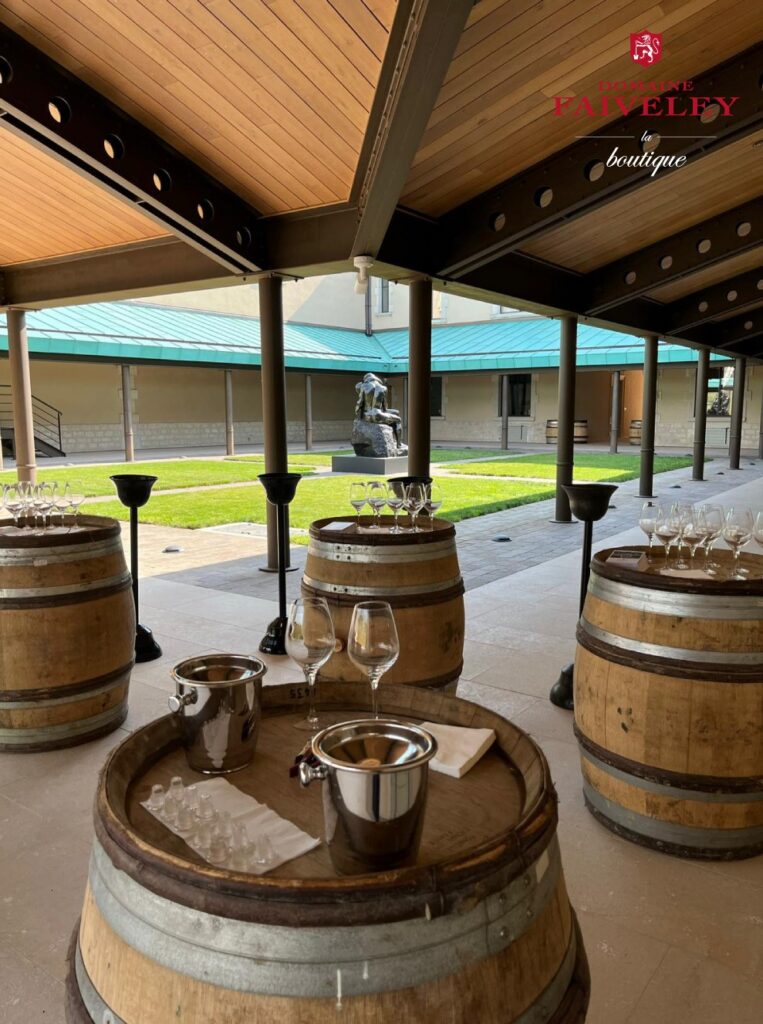
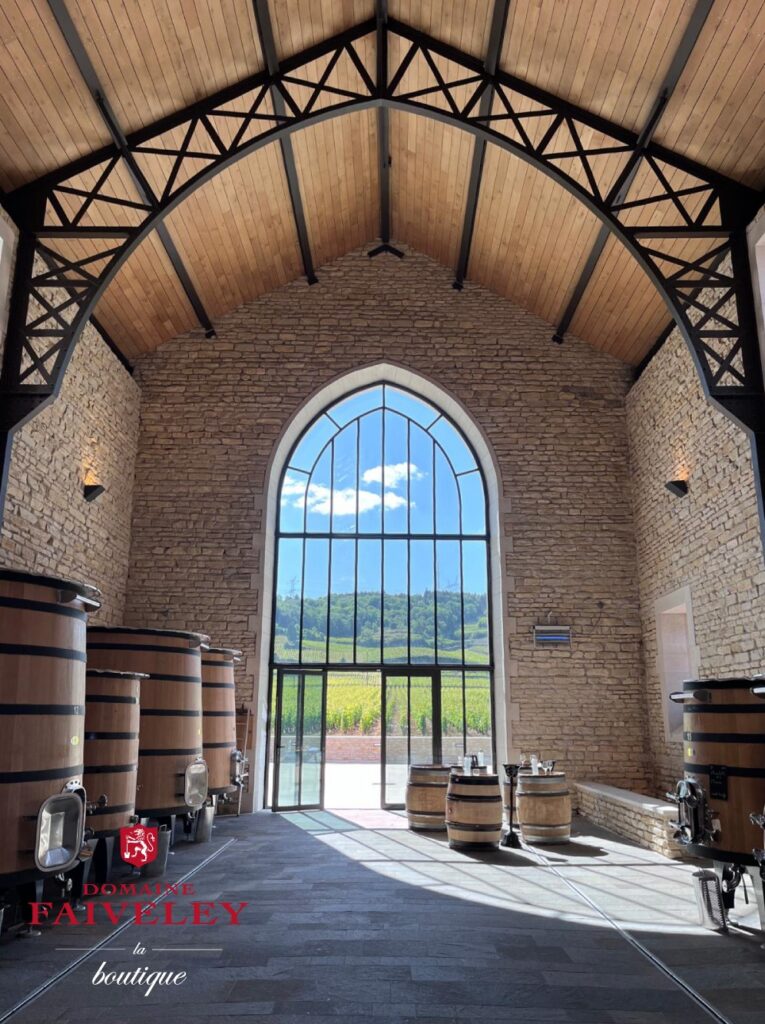
Beaune's claim to the title of wine capital of Burgundy isn't merely marketing — it's historical fact. The city has served as the trading hub of the region since the Dukes of Burgundy held court here in the 14th and 15th centuries, and the great négociant houses that line its streets — Bouchard Père & Fils, Joseph Drouhin, Louis Jadot, Patriarche — have shaped the global wine trade for generations.
Beaune sits at the geographic centre of the Côte d'Or (literally, "Slope of Gold"), a narrow 50km limestone escarpment that produces some of the most expensive and sought-after wines in the world. To the north, the Côte de Nuits is Pinot Noir country — home to Gevrey-Chambertin, Vosne-Romanée, and the mythical Romanée-Conti. To the south, the Côte de Beaune gives us the world's greatest white Burgundies from Meursault, Puligny-Montrachet, and Chassagne-Montrachet, alongside the silky reds of Pommard and Volnay.
The classification system here is uniquely complex and centuries old. Understanding the difference between a village wine, a premier cru, and a grand cru isn't just academic — it's the key to unlocking extraordinary value and extraordinary pleasure. Our Decanter Tours experts will guide you through this labyrinth with ease.
Burgundy is the birthplace of the concept of terroir — the idea that a wine's character is inseparable from the specific patch of earth it comes from. Here, two adjacent vineyards separated by a single track can produce wines of dramatically different character. Nowhere in the world is this principle more purely expressed than in Burgundy, and Beaune is your gateway to experiencing it first-hand.
⭐ DECANTER TOURS INSIDER TIPS — Its not what you know its who WE know!
| Burgundy is all about who you know. Getting into some of the properties is extremely tricky. With our connections you can visit the most important Burgundy houses and taste many exclusive wines. |
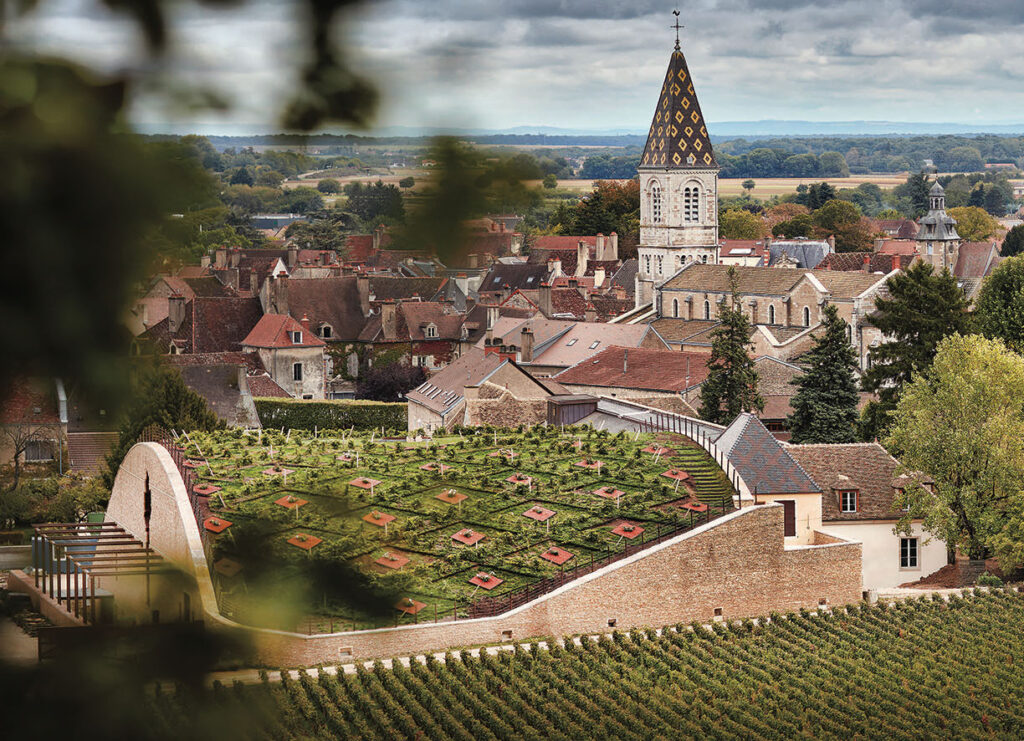
No building in Burgundy is more photographed, more storied, or more central to the region's identity than the Hôtel-Dieu des Hospices de Beaune. Built in 1443 by Nicolas Rolin, Chancellor to Philip the Good, Duke of Burgundy, it was founded as a charitable hospital for the poor — and it continued operating as a working hospital until 1971. Today it is a UNESCO World Heritage Site, a museum, and the stage for one of the world's most important annual wine events.
The building's Flemish Gothic exterior gives way to one of the most breathtaking interior courtyards in France: a dazzling polychrome tiled roof in geometric patterns of green, yellow, red, and black, surrounded by ornate timber galleries. The Great Hall of the Poor, where patients once lay in beds along the walls, is preserved exactly as it was, complete with a vast Flemish altarpiece by Rogier van der Weyden — considered one of the masterpieces of 15th-century Northern European art.
Even for travellers who consider themselves purely wine-focused, the Hôtel-Dieu is unmissable. It is, quite simply, one of the most beautiful buildings in France.

Every year on the third Sunday of November, the Hospices de Beaune hosts what is often called the world's greatest charity wine auction. The auction has been held almost without interruption since 1859, raising funds for the Hospices' medical and social welfare programmes.
The wines auctioned come from over 60 hectares of premier and grand cru vineyards — donated over the centuries by Burgundian families — and are sold by the barrel, before bottling, to négociants, private collectors, and restaurants from around the world. The prices achieved serve as a barometer for the vintage and for Burgundy's fortunes more broadly.
The auction weekend — known as Les Trois Glorieuses — is Beaune at its most festive and frenetic, encompassing a grand dinner at the Château du Clos de Vougeot on Saturday, the auction itself on Sunday, and the Paulée de Meursault on Monday, where producers and guests bring their finest bottles to share in one of Burgundy's most joyful traditions.
Beneath Beaune's streets lies a labyrinth of cellars stretching for miles — some dating back to the 12th century. Many of the world's most prestigious Burgundy négociants have their headquarters here, and visits to their cellars offer both a sensory education and a genuine connection to centuries of winemaking history.
Bouchard Père & Fils — Founded in 1731 and now one of Burgundy's largest domain owners, Bouchard operates from the Château de Beaune, a former fortress. Their cellars house a collection of historic vintages going back to the 18th century — a living archive of Burgundy's past.
Joseph Drouhin — Established in 1880, Drouhin is celebrated for wines of exceptional elegance and precision. Their cellars beneath Beaune incorporate medieval Gallo-Roman cisterns, caves of the Dukes of Burgundy, and 19th-century cellars of the Kings of France.
Louis Jadot — One of Burgundy's most reliable and respected names, Louis Jadot produces wines from a vast range of appellations, from humble Bourgogne to the grandest crus. Their Beaune cellars and tasting room are among the most visitor-friendly in the region.
Patriarche Père & Fils — Patriarche boasts the largest cellars in Burgundy — over 5km of tunnels beneath the old Convent of the Visitation. Self-guided tours with a tastevin allow visitors to sample their way through a remarkable range of wines at their own pace.

Beyond the négociant houses, Beaune and its surrounding villages are home to dozens of smaller family domaines that offer a more intimate and often more revelatory tasting experience. Meeting the winemaker in their cellar, understanding their philosophy, and tasting wines still evolving in barrel is one of Burgundy's great pleasures.
Located in the historic Collégiale de Beaune church, the Marché aux Vins offers a self-guided tasting experience through 14 wines from across the Côte d'Or appellations. It's an excellent introduction to the full range of Burgundy styles and a good way to calibrate your palate before deeper exploration.
| ⭐ DECANTER TOURS INSIDER TIPS — 🍷 Our Burgundy itinerary takes you beyond the visitor centres and into the actual cellars — tasting with Christine Drouhin, Léon Amiot, and the Henri Gouges family on a personal, first-name basis. We've also secured exclusive access to Maison Bouchard Griveau, a micro-domaine producing just 20,000 bottles annually with no US distribution — the kind of discovery you simply cannot make on your own. These are not curated tourist experiences; they are genuine relationships, built over years, that open doors no guidebook 📖 can unlock. |
The D122, known as the Route des Grands Crus, is one of the world's great scenic drives — a narrow road winding north from Beaune through villages whose names read like a wine lover's dream: Pommard, Volnay, Meursault, Puligny-Montrachet heading south; Aloxe-Corton, Nuits-Saint-Georges, Vosne-Romanée, Chambolle-Musigny, Gevrey-Chambertin heading north.
At every turn, hand-painted signs mark the boundaries of the world's most valuable agricultural land. The grand cru vineyards — Corton, Romanée-Conti, Chambertin, Le Montrachet — are unfenced, unadorned, and almost shockingly modest to look at. Their greatness is invisible, held in the soil beneath your feet.
Meursault — Just 8km south of Beaune, Meursault is the heart of white Burgundy and one of Burgundy's most charming villages. The wines here are rich, nutty, and complex. The village's annual Paulée de Meursault, held on the Monday after the Hospices auction, is a legendary celebration where 600 guests bring bottles from their personal cellars.
Pommard & Volnay — These neighbouring villages produce two of the Côte de Beaune's finest reds, and make for a fascinating contrast. Pommard wines are typically structured, dark, and long-lived; Volnay wines are notably more elegant, floral, and silky. Tasting them side by side on a single afternoon is a masterclass in how geography shapes flavour.
Nuits-Saint-Georges — The commercial centre of the Côte de Nuits, worth a visit for its cellars and excellent restaurants. Its premiers crus — particularly Les Vaucrains and Les Saint-Georges — are among Burgundy's most age-worthy and compelling wines.
The Clos de Vougeot — The walled vineyard of Clos de Vougeot is one of Burgundy's most iconic sites. Established by Cistercian monks in the 12th century, it covers 50 hectares and is now divided among over 80 different owners. The Château du Clos de Vougeot, home to the Confrérie des Chevaliers du Tastevin, is open to visitors.
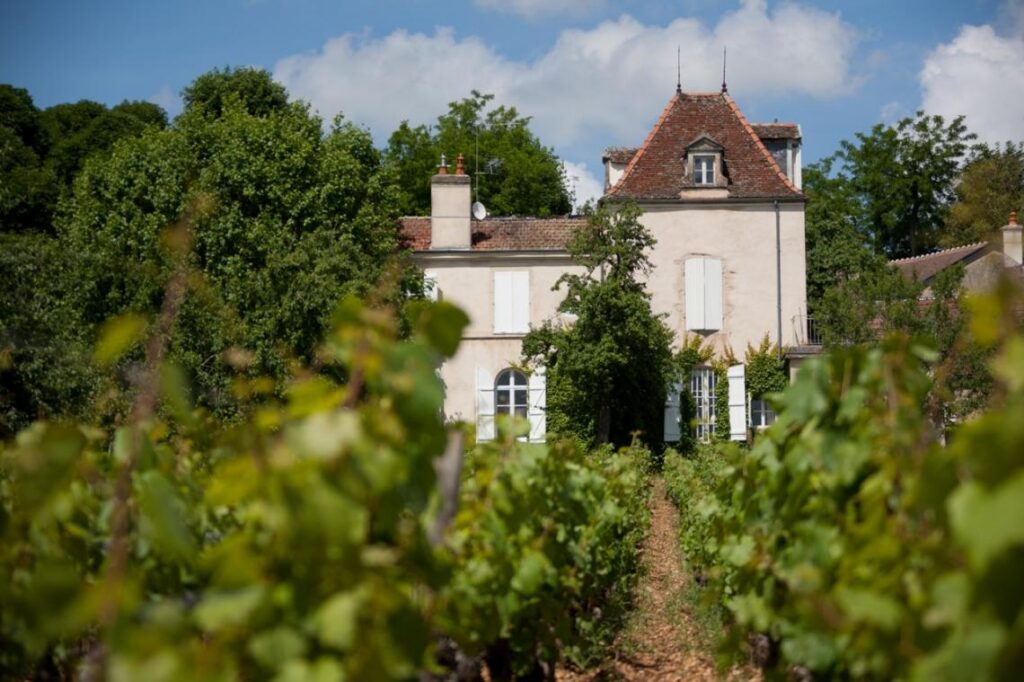
Beaune punches well above its weight when it comes to gastronomy. For a city of just 22,000 people, the concentration of excellent restaurants is remarkable — from Michelin-starred temples to bustling wine bars and traditional bouchons. In Burgundy, food and wine are inseparable, and eating well here is as much a part of the experience as the tastings themselves.
Le Jardin des Remparts — Set within the medieval ramparts, this elegant one-Michelin-star restaurant combines classical Burgundian cooking with contemporary technique. The wine list is a love letter to the Côte d'Or, and the garden setting on a warm evening is unforgettable. Chef Christophe Boquillon in charge here since January 2013, this restaurant is worth a visit. Ingredients are locally sourced and wines from little-known growers, as well as top names.
Ma Cuisine — A Beaune institution beloved by wine professionals and serious collectors for its astonishing wine list — reputedly one of the best in Burgundy — and its honest, market-driven cuisine. Reservations are essential and often need to be made weeks in advance.
Loiseau des Vignes — Part of the Bernard Loiseau group, this wine-focused restaurant pairs traditional Burgundian dishes with an encyclopaedic list of local wines. The set menus with paired flights offer exceptional value for the quality.
Le Carmin is a well-regarded restaurant in the center of Beaune, led by chef Christophe Quéant, known for refined, market-driven Burgundian cuisine with a modern sensibility. It holds a strong local reputation for the quality of its cooking and an excellent, fairly priced Burgundy-focused wine list that complements the food intelligently rather than just padding the bill.
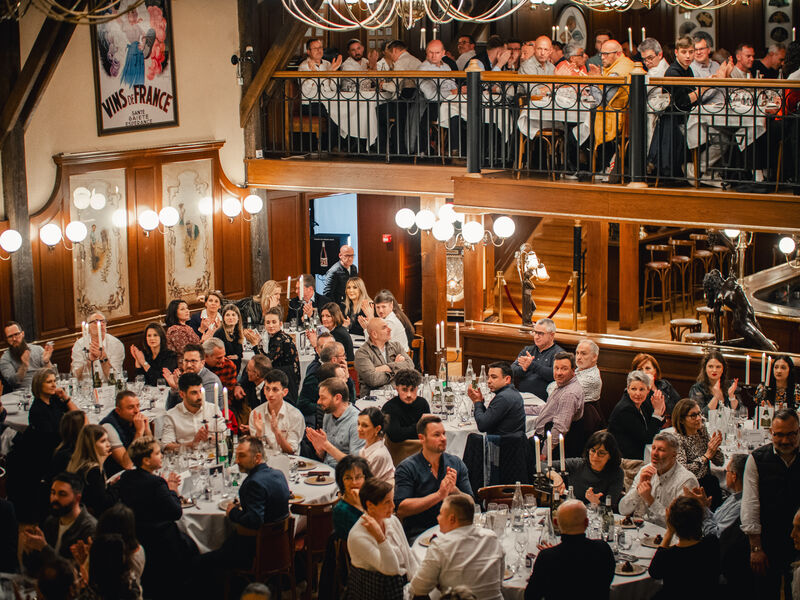
For more relaxed evenings, Beaune's wine bars and bistros are a delight. L'Ecusson offers excellent traditional Burgundian cooking in a warm atmosphere; Caves Madeleine is a favourite with wine trade insiders for its natural wine selection and simple, seasonal plates. The covered market on Place Carnot (open Tuesday and Saturday mornings) is the best starting point for understanding the region's exceptional produce: Époisses and Comté cheeses, Dijon mustard, jambon persillé, gingerbread, and the black truffles of the Hautes-Côtes.
Beaune's accommodation ranges from grand five-star château hotels to intimate chambres d'hôtes within vineyard estates — and choosing the right base significantly shapes your experience of the region.
Hôtel Le Cep — A collection of four historic mansions in the heart of the old town. Le Cep is Beaune's most atmospheric hotel — a labyrinth of antique-furnished rooms, vaulted stone passages, and one of the most beautiful courtyards in the city.
Hôtel de la Paix — A stylish boutique option with a lovely garden and excellent central location, offering a quieter alternative to the busier old-town properties.
Château Hotels of the Côte d'Or — For guests who want to wake up surrounded by vines, several wine estates in the surrounding villages offer outstanding château accommodation — combining a hotel stay with exclusive access to the estate's wines, vineyards, and winemakers.
| ⭐ DECANTER TOURS INSIDER TIPS — Beyond the City Walls We’ll always love the buzz of staying in Beaune’s center, but we have a new "must-stay" secret: Les Sources de Vougeot. From our close partners in Bordeaux and the visionaries behind Bordeaux’s legendary Les Sources de Caudalie, the transformation of the Château de Gilly is nothing short of spectacular. This 5-star gem offers an incredible spa and two distinct dining experiences. It is, quite simply, one of our newest favorites for a luxurious Burgundy escape. Contact Decanter Tours for you next stay here. |
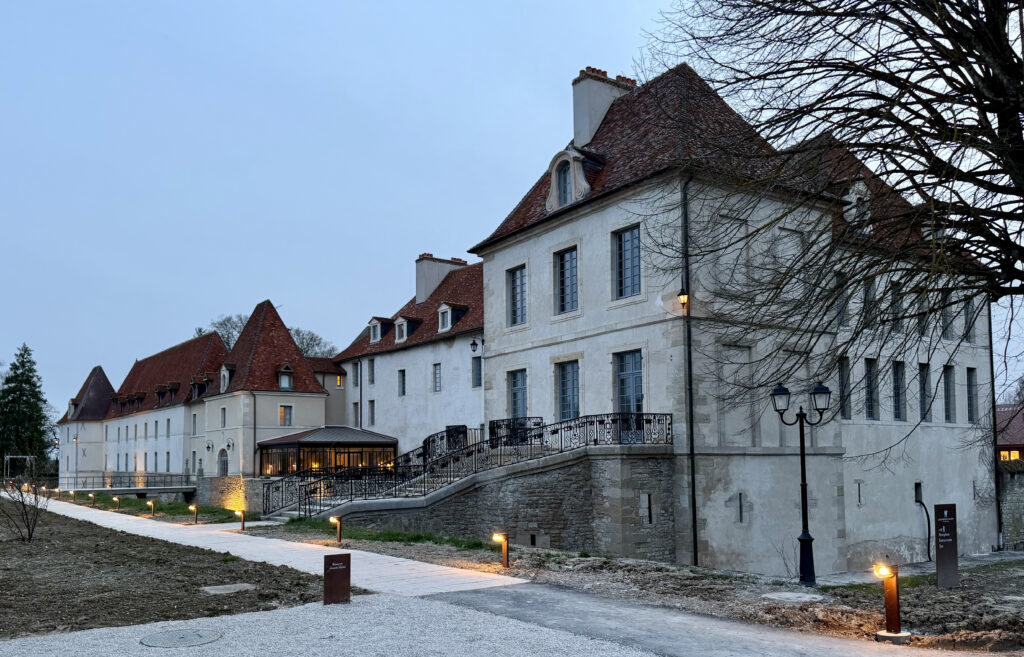
Beaune is a year-round destination, but each season offers a distinct experience. Spring (April–June) brings flowering vines and a quieter city. Summer (July–August) is warm and festive. Harvest season (September–October) is arguably the most exciting time to visit — the vineyards are alive with pickers, and the air carries the fermentation of new wine. However some properties are closed during harvest. Even if you plan well in advance some properties wont accept reservations during this time. November's auction weekend draws the global wine world to Beaune's streets and hotels are at a premium. Winter is peaceful and atmospheric, with excellent deals on accommodation.
Beaune is exceptionally well connected. By TGV, Paris Gare de Lyon to Dijon takes approximately 1 hour 40 minutes, with Beaune a further 25 minutes by TER regional train. Direct Eurostar services connect London to Paris, making Beaune accessible from the UK without flying. By car from Paris, Beaune is approximately 3 hours via the A6 motorway. Lyon airport (1 hour away) and Paris CDG (2.5 hours) are the most practical international gateways.
Within Beaune, the old town is easily walkable. For vineyard exploration, a hire car gives maximum flexibility — though for a proper Burgundy wine tour, having a Decanter Tours driver is safer, more enjoyable and more informative. Cycling is increasingly popular along the vineyard routes. Decanter Tours provides private transport throughout all itineraries, ensuring guests can focus on tasting without logistical concerns.
| ⭐ DECANTER TOURS INSIDER TIPS — The most seamless and scenic route to Burgundy is via the TGV (fast train) from Paris to Dijon. Upon your arrival, we can arrange for a private chauffeur to meet you on the platform, or you can take a short, easy taxi ride directly to your hotel in Beaune—or our new favorite, Les Sources de Vougeot. |
Beaune is a city that rewards depth over breadth, and relationships over reservations. The cellars that don't appear on any tourist map, the winemakers who don't normally receive visitors, the vintages that never reach the open market — these are the experiences that define a truly exceptional Burgundy journey.
Decanter Tours has spent years cultivating the relationships and the expertise to open these doors for our guests. We don't offer wine tourism — we offer immersion in one of the world's greatest living wine cultures.
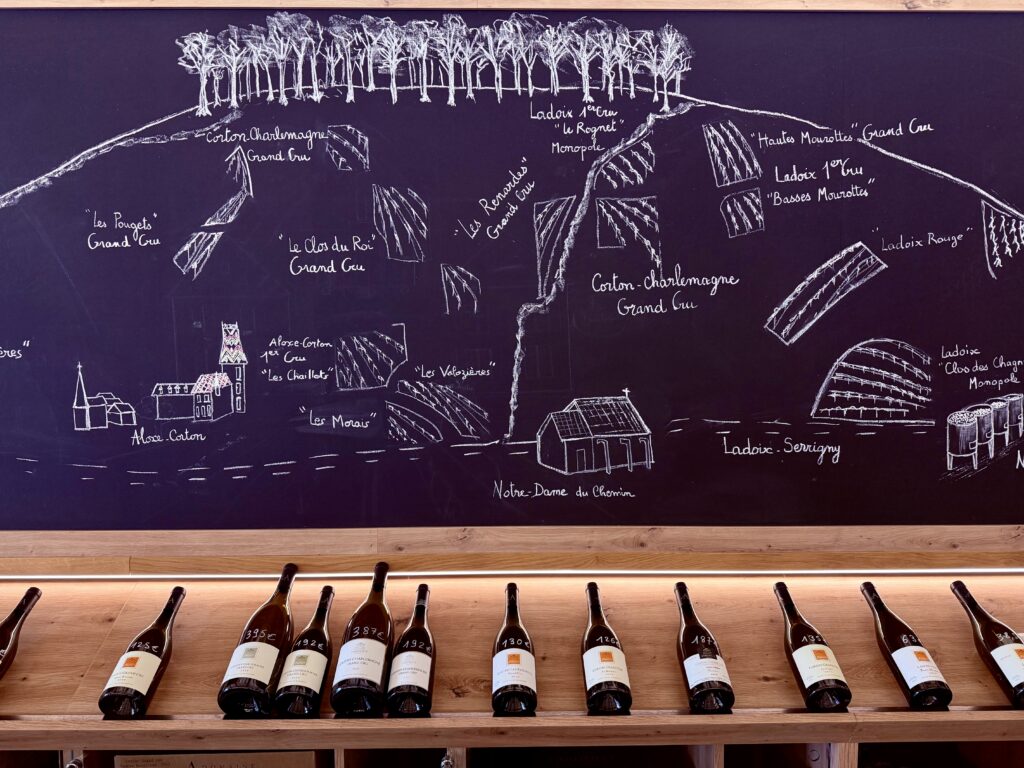
| ⭐ DECANTER TOURS INSIDER TIPS — BEYOND THE TASTING ROOM Don’t just taste Burgundy—experience the heritage. Our flagship Best of Burgundy Wine Tour takes you behind the limestone walls of the region’s most prestigious domains for private "barrel-to-glass" tastings. The Draw: Exclusive access to "cult" estates and vertical tastings of rare vintages. The Value: We skip the tourist crowds in favor of authentic, family-run Grand Crus. Booking: Private tours depart daily from Beaune. We recommend booking 3–6 months in advance to secure the best estates. Explore our Burgundy Packages here. |
Before you start planning, here's a quick-reference summary of everything you need to remember:
Our expert guides are on hand to create your perfect Burgundy itinerary — from a long weekend in Beaune to a full Côte d'Or immersion. contact us
Planning your first French wine tour from Paris? You're facing one of the most delightful dilemmas in wine travel: choosing between the sparkling glamour of Champagne and the rustic elegance of Burgundy. Both regions offer extraordinary experiences, but they cater to different tastes, timeframes, and wine preferences.
Let me help you decide which region deserves your first visit — or why you might want to experience both.
Accessibility is unbeatable. Located just 90 minutes from Paris, Champagne is perfect for day trips or weekend getaways. The towns of Reims and Épernay sit conveniently along train routes, making a Champagne tour entirely feasible without renting a car.
The prestige factor is real. Walking through the centuries-old chalk cellars of Moët & Chandon, Veuve Clicquot, or Taittinger delivers an incomparable sense of history and luxury. These aren't just wineries — they're monuments to French heritage and craftsmanship.
It's universally loved. Even people who claim they "don't like wine" usually enjoy Champagne. The crisp bubbles, the celebratory atmosphere, and the approachable nature of sparkling wine make it perfect for mixed groups or wine novices.
The experience is structured and polished. Major Champagne houses offer slick, professional tours with multiple language options. You'll learn about the méthode champenoise, explore dramatic underground tunnels carved by Romans, and taste vintage cuvées in elegant tasting rooms.
A typical day in Champagne includes visiting 2–3 prestigious houses, lunch in a charming bistro in Épernay or Reims, and perhaps a stop at a smaller grower-producer for a more personal experience. The landscape of rolling vineyards dotted with windmills is Instagram-ready, and the Champagne Route (Route Touristique du Champagne) offers picturesque drives through villages like Hautvillers, where Dom Pérignon perfected his craft.

The wine is simply extraordinary. Burgundy produces some of the world's most coveted and complex wines. If you're a serious wine enthusiast, tasting a Grand Cru Pinot Noir from Gevrey-Chambertin or a white Burgundy from Meursault is a pilgrimage, not just a tour.
It's authentically intimate. Unlike Champagne's grand houses, Burgundy revolves around small family estates where the winemaker might personally pour your wine in their centuries-old cellar. These encounters feel genuine, warm, and deeply educational.
The diversity is remarkable. Burgundy offers both world-class reds (Pinot Noir) and whites (Chardonnay) across a patchwork of climats — tiny vineyard plots with distinct personalities. A Burgundy wine tour from Paris introduces you to the concept of terroir better than anywhere else on Earth.
Food reaches another level. Burgundian cuisine is legendary: coq au vin, boeuf bourguignon, escargots, époisses cheese, and pain d'épices. The region's restaurants and bistros take food-and-wine pairing seriously, making every meal memorable.
The scenery is storybook-perfect. Medieval villages like Beaune, Pommard, and Vougeot feature cobblestone streets, Gothic architecture, and vine-covered hillsides. The Hospices de Beaune, with its colorful tiled roof, is one of France's most photographed buildings.
A proper Burgundy tour spans the Côte de Nuits and Côte de Beaune, with stops at family domaines, perhaps a visit to a négociant like Louis Jadot, and lunch at a Michelin-starred restaurant or countryside auberge. You'll learn to appreciate subtle differences between neighboring villages and understand why a few meters can transform a wine's character.
The region requires more time — ideally 2–3 days to fully appreciate — but rewards patience with unforgettable tastings and genuine connections with passionate winemakers.
| Feature | Champagne | Burgundy |
|---|---|---|
| Distance from Paris | 90 minutes | 2–2.5 hours |
| Ideal Trip Length | 1–2 days | 2–4 days |
| Wine Style | Sparkling wine (Champagne) | Still wines (Pinot Noir & Chardonnay) |
| Atmosphere | Prestigious & polished | Intimate & authentic |
| Typical Venues | Grand historic houses with underground cellars | Small family estates & domaines |
| Best For | First-time visitors, celebration seekers, day-trippers | Wine enthusiasts, terroir lovers, foodies |
| Experience Level | Beginner-friendly | Intermediate to advanced |
| Tour Style | Structured, multi-language tours | Personal, appointment-based visits |
| Food Scene | Good bistros & restaurants | Exceptional Burgundian cuisine & Michelin dining |
| Landscape | Rolling vineyards, champagne houses | Medieval villages, patchwork climats |
| Average Tasting Cost | €20–50 per house | €15–40 per domaine (higher for Grand Crus) |
| Accessibility | Easy by train, walkable towns | Better with a car or private tour |
| Celebrity Factor | High (Moët, Veuve Clicquot, Dom Pérignon) | Moderate (cult producers known to wine lovers) |
| Group-Friendly | Excellent for mixed groups | Better for dedicated wine lovers |
| Instagram Appeal | Chalk cellars, champagne labels, elegant settings | Colorful tiled roofs, vine-covered hills, rustic charm |
Here's a secret: you don't have to choose. Many wine lovers design a 5–7 day itinerary that includes both regions. Start with 2 days in Champagne (closer to Paris), then continue south to Burgundy for 3–4 days. This approach provides contrast — sparkling versus still, grand houses versus intimate cellars, easy accessibility versus deeper exploration.

For your first French wine region visit, I'd recommend Champagne if you want an accessible, glamorous introduction to French wine culture with minimal planning stress. Choose Burgundy if you're already wine-savvy, have more time, and crave a deeply immersive experience that connects you to terroir and tradition.
But honestly? Both regions are magnificent. Your "first" visit to either will almost certainly inspire you to visit the other. The question isn't really which one to visit — it's which one to visit first.
I used Decanter Tours for a 10-day custom trip through Champagne, Burgundy, and Bordeaux. From the moment we were picked up in Reims to our final tasting in Beaune, everything was seamless. Their ability to secure private visits at prestigious houses like Moët and small family domaines in the Côte de Nuits was impressive. Our guides weren't just drivers; they were true wine experts who helped us compare the terroirs of both regions in a way we never could have on our own.
— Verified Client ReviewChampagne is approximately 90 minutes from Paris by train or car. Reims is easily accessible via high-speed TGV trains, making day trips entirely feasible.
Burgundy is about 2 hours from Paris by train (to Beaune) or 2.5–3 hours by car. While possible as a long day trip, it's best experienced over 2–3 days.
Absolutely. A week-long trip allows 2 days in Champagne and 3–4 days in Burgundy, giving you a comprehensive experience of both regions.
Burgundy tends to be pricier overall, particularly for Grand Cru wines and Michelin-starred dining. However, both regions offer options for various budgets, from modest grower-producers to prestigious estates.
Yes, for both regions. Champagne's major houses often accommodate walk-ins, but booking ensures availability and better time slots. Burgundy's small family estates typically require advance reservations.
Champagne's major houses cater to international tourists with tours in multiple languages. Burgundy's smaller estates may require more French, though many winemakers speak English. Booking with a tour company provides translation and ensures smooth communication.
Just 90 minutes from Paris lies one of the world's most prestigious wine regions—Burgundy. With its patchwork of legendary vineyards, medieval wine villages, and world-class domaines, Burgundy offers an intimate, sophisticated wine experience unlike any other. Whether you're a seasoned collector or a curious enthusiast, planning the perfect Burgundy wine tour from Paris requires insider knowledge and careful consideration. Here's everything you need to know.
The TGV high-speed train from Paris Gare de Lyon to Beaune takes just 2 hours and 20 minutes, making it the most efficient way to reach Burgundy's wine capital. Trains run multiple times daily, with tickets ranging from €40-€120 depending on booking time. Early morning departures allow you to maximize your day among the vines.
For a seamless, stress-free experience, consider a private transfer with Decanter Tours. Our expert guides collect you from your Paris hotel and transform the 3-hour journey into an educational wine experience, providing context about Burgundy's terroir, history, and classification system before you even arrive. You'll step out of the car already equipped with the knowledge to appreciate what you're about to taste.
Renting a car gives you the freedom to explore at your own pace, though navigating Burgundy's narrow village roads and strict drink-driving laws (0.05% BAC limit) requires planning. Budget €80-€150 per day for rental, plus tolls and fuel.
The historic town of Beaune serves as the ideal headquarters for your Burgundy adventure. Home to the famous Hospices de Beaune, countless wine cellars, and exceptional restaurants, Beaune combines medieval charm with wine expertise. Most domaines are within a 20-minute drive, making it logistically perfect for day-long tastings.
North of Beaune, the Côte de Nuits produces Burgundy's most celebrated Pinot Noirs. Villages like Vosne-Romanée, Gevrey-Chambertin, and Chambolle-Musigny contain some of the world's most expensive vineyard real estate. The wines here are structured, age-worthy, and profoundly expressive of their terroir. Don't miss a visit to the historic Château du Clos de Vougeot, the region's iconic 12th-century monastery.
South of Beaune, the Côte de Beaune excels at both red and white wines. Puligny-Montrachet and Meursault produce the world's finest Chardonnays—rich, mineral-driven whites with incredible aging potential. Meanwhile, villages like Pommard and Volnay craft elegant, perfumed Pinot Noirs with silky tannins. This sub-region offers exceptional variety for those wanting to explore Burgundy's full spectrum.
Burgundy operates differently from Bordeaux. Instead of large châteaux, most producers are small family-owned domaines farming tiny parcels of land—sometimes just a few rows of vines. These grower-producers make wine exclusively from their own grapes, offering intimate, terroir-focused experiences.
Négociants, by contrast, purchase grapes or finished wine from multiple growers to create larger productions under their own labels. Houses like Louis Jadot, Joseph Drouhin, and Bouchard Père & Fils offer consistency and accessibility, making them excellent starting points for understanding Burgundy's style and geography.
Unlike some wine regions, most Burgundy domaines don't offer walk-in tastings. Top producers require appointments weeks or even months in advance, and many don't accept direct bookings from the public. This is where a well-known and respected wine tour operator with exceptional connections and entrées like Decanter Tours becomes invaluable.

Our established relationships grant you access to prestigious domaines that would otherwise be impossible to visit. We handle all reservations, coordinate timing, and ensure you visit producers aligned with your interests—whether that's biodynamic farming, historic family estates, or up-and-coming winemakers challenging the establishment.
Quality over quantity is the golden rule for Burgundy tastings. Most experts recommend visiting 2-3 domaines per day to allow time for meaningful conversation, cellar tours, and proper appreciation of the wines. Each tasting typically lasts 60-90 minutes and may include 6-12 wines. This rhythm prevents your palate from staging a revolt while maximizing what you actually remember the next day.
A well-paced itinerary might include a prestigious Grand Cru producer in the morning, lunch at a local bistro featuring regional specialties or directly at a producers, and an afternoon visit to an emerging domaine working with natural or biodynamic methods.
While Beaune offers numerous charming hotels, our newest partnership brings an unparalleled experience: Les Sources de Vougeot, a newly opened luxury property in the heart of the Côte de Nuits. Situated just minutes from the legendary Clos de Vougeot Grand Cru vineyard and the historic Château, this exclusive hotel places you at the epicenter of Burgundy's most prestigious wine villages.
Wake up surrounded by ancient stone walls and vines that have produced some of the world's most sought-after Pinot Noir for centuries. The hotel combines modern luxury with monastic heritage, featuring wine-focused programming, a Michelin-caliber restaurant, and direct access to the Château's historic cellars. As Decanter Tours partners, we can arrange preferential rates and exclusive experiences for our clients.
Staying at Clos de Vougeot isn't just accommodation—it's an immersion into Burgundy's soul, where you'll understand why the Cistercian monks chose this exact spot in 1098 to create what would become one of wine's most sacred sites.
Burgundy tastings are intimate, educational affairs. Unlike Bordeaux châteaux with their dedicated hospitality divisions, most Burgundy domaines are small family operations where the winemaker or owner personally guides you through their wines, explaining vineyard locations, winemaking decisions, and vintage variations. This lack of formal structure means visits feel more like conversations with passionate artisans than polished presentations. Come prepared with thoughtful questions about terroir, farming practices, or cellar techniques—engagement is appreciated.
Burgundy's culinary tradition rivals its wines. The region birthed the concept of terroir-driven French cuisine, with dishes designed to complement local wines. Classic preparations include boeuf bourguignon, coq au vin, escargots de Bourgogne, and gougères (cheese puffs perfect with Champagne or Crémant de Bourgogne).
Beaune alone boasts several Michelin-starred restaurants, while every village has its bistro serving regional specialties. Don't miss the local cheeses—Époisses, with its pungent orange rind, pairs beautifully with aged white Burgundy, while Cîteaux, created by the same monks who planted Clos de Vougeot, offers creamy complexity. Ask Decanter Tours for our top notch restaurant recommendations.
Each season offers distinct advantages. Spring (April-June) brings blooming vines and pleasant weather, though May can be rainy. Summer (July-August) offers warmth and long days but attracts crowds and higher prices. Many locals vacation in August, limiting access to some producers.
Fall harvest (September-October) provides the most dramatic experience—watching vendanges unfold, tasting fermenting juice, and feeling the region's excitement. However some properties close to the public during harvest. Winter (November-March) offers quiet contemplation, snow-dusted vineyards, and longer, more personal conversations with winemakers who have time to share their knowledge without summer's rush.

While it's possible to plan a DIY Burgundy tour, the region's complexity and exclusive nature make expert guidance transformative. A tour organized through Decanter Tours provides:
Our clients consistently report that the insights gained from a guided tour would have taken years of self-study to acquire. When visiting one of the world's most complex wine regions, expertise isn't a luxury—it's essential. See a sample of a previous 3 day Burgundy wine tour here.
"Our private tour of the Côte de Nuits and Côte de Beaune with Decanter Tours was the highlight of our French holiday. As Burgundy novices, we were worried about the complexity of the region, but our guide made the 'Climats' and classifications so easy to understand. We gained access to small, family-owned domaines we never could have found on our own. The lunch in Beaune was spectacular—truly a 5-star experience from start to finish!" — Verified Traveler, October 2025
A private full-day Burgundy wine tour with Decanter Tours starts at €2,000 for 2 people, including expert guide, luxury transportation, and all domaine reservations. Tasting fees at domaines (typically €20-€100 per person) and meals are additional. Group tours may cost less per person. The more the merrier! Contact us for your personalized quotation.
Yes, though it requires early starts and efficient planning. The TGV gets you to Beaune in 2h20, allowing 5-6 hours in wine country before returning. However, most visitors find 2-3 days ideal for experiencing Burgundy properly without rush. Staying overnight at les Sources de Vougeot or in Beaune transforms the experience from a tasting marathon into a cultural immersion.
While many top producers speak English, nuanced conversations about terroir, winemaking philosophy, and vineyard history flow more naturally in French. Our bilingual guides not only translate but also interpret cultural context, asking probing questions you might not think of, and ensure nothing is lost in translation. This dramatically enriches the experience beyond simple tasting notes.
Smart casual is the standard—think well-fitted jeans or chinos with a collared shirt or blouse. Comfortable walking shoes are essential, as you'll tour cellars and vineyards on uneven terrain. Avoid heavy perfumes or colognes that interfere with wine aromas. In cooler months, bring layers; ancient stone cellars stay cold year-round. If visiting high-end domaines, err toward dressier options.
There's never any obligation to buy, though purchasing 2-4 bottles from domaines you particularly enjoy supports small producers and allows you to revisit the experience at home. Many domaines offer allocations of rare wines only to visitors. Decanter Tours can arrange shipping to most countries, handling customs and logistics. Budget €30-€150 per bottle depending on appellation and producer prestige. Shipping costs range from 150- 300€ depending on the area to which the wine is shipped.
Planning the perfect Burgundy wine tour from Paris requires more than just good intentions—it demands insider access, expert knowledge, and seamless logistics. At Decanter Tours we have spent years cultivating relationships with Burgundy's finest domaines, ensuring you experience the region at its highest level.
From exclusive tastings at prestigious Grand Cru estates to intimate conversations with passionate winemakers, we craft bespoke itineraries that transform wine tourism into wine education. And with our new partnership at les Sources de Vougeot hotel, we can now offer overnight experiences that place you at the very heart of Burgundy's living history.
Contact Decanter Tours today to begin planning your unforgettable journey through Burgundy. Whether you're a seasoned collector seeking allocations of rare wines or a curious beginner wanting to understand what makes Burgundy special, we'll design an experience perfectly matched to your interests, pace, and palate.
Experience the intimate charm of Burgundy's family domaines and centuries-old terroir.
France's two most prestigious wine regions—Bordeaux and Burgundy—represent fundamentally different philosophies in winemaking that have shaped the global wine industry for centuries. Bordeaux built its reputation on the art of blending multiple grape varieties to create harmonious, age-worthy wines that express the vision of the winemaker. Burgundy, conversely, has perfected the single-varietal approach, crafting wines from Pinot Noir and Chardonnay that reveal the nuanced character of individual vineyard sites, or terroir.
For collectors and enthusiasts, understanding these contrasting approaches is essential to building a balanced cellar and appreciating what each bottle represents. This first part explores the historical, practical, and philosophical reasons behind these divergent approaches and what they mean for wine quality and expression.
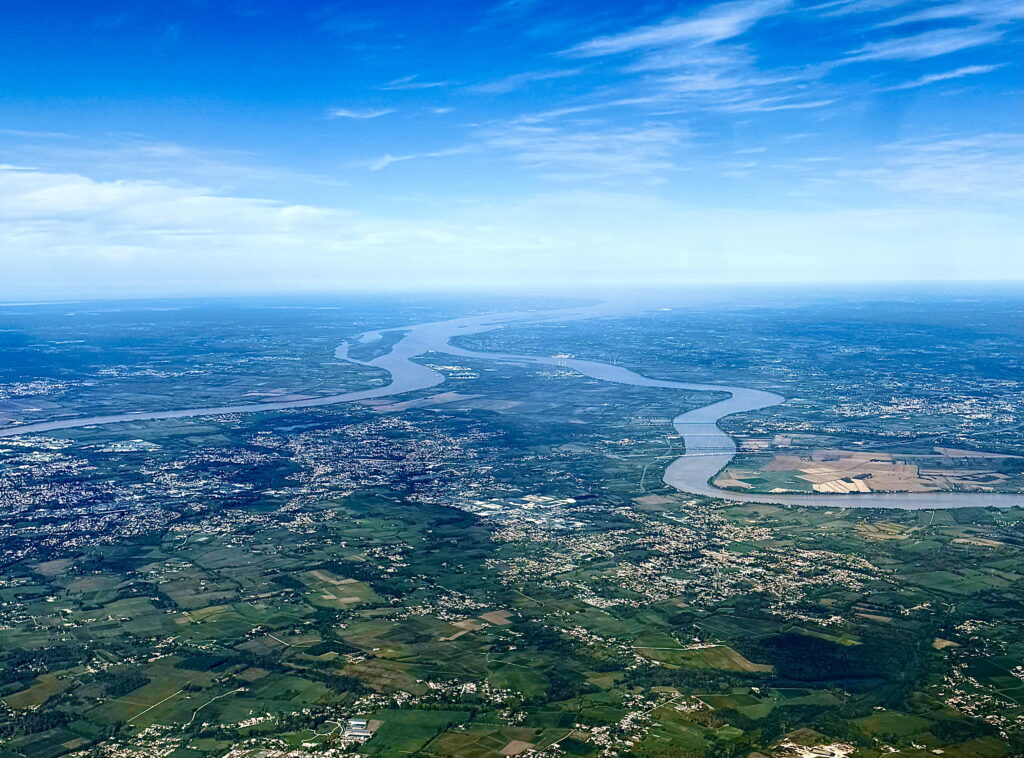
Bordeaux's blending tradition emerged from both necessity and opportunity. Located on the Atlantic coast with the Gironde estuary providing access to global markets, Bordeaux became a commercial powerhouse in the 17th and 18th centuries. British merchants, particularly influential after Eleanor of Aquitaine's marriage to Henry II in 1152, demanded consistent, age-worthy wines that could survive long sea voyages.
The region's maritime climate—mild, humid, and variable—made relying on a single grape variety risky. Vintage variation could be extreme, and different varieties ripened at different times, offering natural insurance against weather challenges. Merlot ripens early and provides softness and fruit; Cabernet Sauvignon ripens later, contributing structure, tannins, and aging potential; Cabernet Franc adds aromatic complexity and freshness; Petit Verdot and Malbec offer color and spice notes.
The châteaux system, where individual estates controlled large vineyard holdings, also encouraged blending. Most properties had diverse terroirs within their boundaries—gravelly hilltops ideal for Cabernet Sauvignon, clay-rich valleys perfect for Merlot. Rather than bottling these separately, proprietors blended them to create a consistent house style that could be recognized and traded internationally.
The 1855 Classification, created for the Paris Universal Exhibition, institutionalized this approach by ranking entire châteaux rather than specific vineyards, reinforcing the concept that the estate's blending skill was as important as the land itself.
Burgundy's single-varietal philosophy has entirely different origins. Benedictine and Cistercian monks began cultivating vines in Burgundy during the Middle Ages, approaching viticulture with scientific rigor and spiritual dedication. Over centuries, they meticulously mapped the region, identifying subtle differences in soil, slope, and exposition that affected wine quality.
This created Burgundy's famous climat system—a mosaic of precisely delineated vineyard parcels, each with distinct characteristics. Unlike Bordeaux's large estates, Burgundian vineyards were fragmented through Napoleonic inheritance laws, which required equal division of property among heirs. This created a complex patchwork where a single climat might have dozens of different owners, each farming small plots.

In this context, blending made little sense. The entire value proposition rested on showcasing the unique expression of each climat. A wine from Romanée-Conti commands astronomical prices not because of blending artistry but because it captures the essence of that specific 1.8-hectare vineyard. Combining it with fruit from neighboring parcels would dilute rather than enhance its identity.
Burgundy's continental climate—more extreme than Bordeaux's, with colder winters and significant vintage variation—paradoxically strengthened the single-varietal tradition. Pinot Noir and Chardonnay proved ideally suited to the region's conditions, and centuries of selection created distinctive Burgundian clones adapted to local terroirs. Why plant multiple varieties when these two had been perfected?
The heart of Bordeaux winemaking is the assemblage—the blending process that typically occurs in late winter or early spring following harvest. This is where technical expertise meets artistic vision, as winemakers taste through numerous fermentation lots to determine the final blend composition.
A typical Right Bank château (Pomerol or Saint-Émilion) might produce 15-25 different lots in a given vintage, separated by grape variety, vineyard parcel, and vine age. A larger Left Bank estate (Médoc or Graves) could have 40-60 lots or more. Each lot is evaluated for its aromatic profile, structure, tannin quality, and aging potential.
The winemaker's goal is creating a whole greater than the sum of its parts. Merlot might contribute 60% of the blend, providing a plush core of dark fruit and velvety texture. Cabernet Sauvignon adds 30%, bringing cassis notes, firm tannins, and structural backbone. Cabernet Franc contributes 8%, offering violets, graphite minerality, and mid-palate lift. Petit Verdot provides the final 2%, adding inky color, exotic spice, and a grip that will help the wine age for decades.
What makes this process fascinating is its variability. The same château might shift from 70% Merlot in a cool vintage to 65% Cabernet Sauvignon in an ideal year. Some estates have moved toward higher Cabernet Franc percentages as climate change has made this variety more reliably ripe. Others have reduced or eliminated Malbec and Petit Verdot, which can be excessively tannic in warmer years.
Bordeaux's blending philosophy also allows for rigorous selection through the grand vin system. Only the finest lots make it into the château's primary label. Wines from younger vines, less optimal parcels, or lots that don't fit the desired profile are declassified into second wines or third wines.
Château Margaux might select only 35-40% of its production for the grand vin in challenging vintages, with the remainder becoming Pavillon Rouge du Château Margaux or sold off in bulk. This selection process, enabled by having multiple varieties and parcels to choose from, helps maintain quality consistency across vintages—a crucial factor for collectors and the secondary market.

Bordeaux's appellations are defined broadly, allowing estates to blend across diverse terroirs within their holdings. A Pauillac château might blend Cabernet Sauvignon from well-drained gravel croupes (mounds) near the Gironde with Merlot from clay-limestone parcels further inland, creating a wine that benefits from both terroirs' strengths.
This contrasts sharply with Burgundy, where appellation boundaries are drawn tightly around specific climats. A producer cannot blend Gevrey-Chambertin with Chambolle-Musigny and call it either—it would be declassified to the regional Bourgogne appellation.
Burgundy's commitment to single-varietal wines rests on the premise that Pinot Noir and Chardonnay are ideal vehicles for expressing terroir. Both varieties are considered relatively neutral and transparent compared to more characterful grapes like Cabernet Sauvignon or Syrah. This allows the influence of soil, microclimate, and vineyard position to shine through clearly.
Pinot Noir's thin skins make it sensitive to growing conditions, reflecting even subtle variations in temperature, sunlight exposure, and water availability. Two vineyards separated by a footpath can produce dramatically different wines—one elegant and perfumed, the other more structured and earthy—because of slight differences in soil depth or limestone content.
Chardonnay similarly acts as a transparent medium. In Chablis's Kimmeridgian limestone, it produces steely, mineral-driven wines with oyster-shell salinity. In Meursault's deeper, richer soils, it becomes opulent and nutty. In Puligny-Montrachet, it achieves laser-like precision and tension. The variety doesn't impose a strong personality; instead, it reveals the vineyard's character.

Burgundy's 1,247 classified climats represent winemaking at its most granular. These precisely delineated vineyard parcels range from tiny monopoles like Romanée-Conti (1.8 hectares) to larger Grands Crus like Corton (160 hectares, though further subdivided by specific lieu-dits).
This system demands single-varietal wines because the entire point is comparative tasting. Collectors and connoisseurs can taste through a range of climats—Chambertin, Chambertin-Clos de Bèze, Latricières-Chambertin, Mazis-Chambertin—all from the same village, all made from 100% Pinot Noir, often by the same producer, sometimes from the same vintage. The differences, therefore, must reflect terroir rather than blending decisions or varietal composition.
This transparency creates accountability. A Burgundian winemaker cannot hide behind blending if a particular climat underperforms. The wine is what it is—a direct expression of that vineyard in that vintage, shaped by farming and winemaking choices but fundamentally dictated by terroir.
Ironically, while Burgundy eliminates varietal blending, the producer's signature becomes even more important. With hundreds of growers farming the same climats, choices about vine density, organic or biodynamic farming, harvest timing, whole-cluster fermentation, oak regimen, and aging decisions create profound stylistic differences.
Domaine de la Romanée-Conti's Richebourg tastes distinctly different from Domaine Leroy's Richebourg or Domaine Méo-Camuzet's, even though all come from the same Grand Cru climat. The single-varietal approach puts every decision under a microscope, making Burgundy perhaps the ultimate expression of winemaker craft within the constraints of terroir.
Bordeaux's oceanic climate creates moderate growing conditions ideal for blending multiple varieties. The Gulf Stream influence keeps winters mild and summers warm but rarely extreme. Rain can arrive at inopportune moments—during flowering, causing coulure (poor fruit set), or at harvest, diluting flavors.
The region's diverse geology adds complexity. The Left Bank's Médoc features deep gravel beds deposited by ancient rivers, providing excellent drainage and heat retention perfect for late-ripening Cabernet Sauvignon. The Right Bank's Pomerol and Saint-Émilion have clay, sand, and limestone combinations favoring earlier-ripening Merlot.
These variations make single-varietal wines risky. A Cabernet Sauvignon-only wine from Bordeaux might be green and harsh in cool vintages, overripe and jammy in hot ones. Blending provides balance across variable conditions.
Burgundy's continental climate creates vintage variation that paradoxically reinforces single-varietal focus. Cold winters, spring frost risk, and significant diurnal temperature shifts during ripening create challenging conditions where only the best-adapted varieties thrive.
Pinot Noir and Chardonnay have evolved over centuries to perform reliably in Burgundy's climate. Pinot Noir's early ripening allows it to avoid autumn rains, while its genetic diversity (countless clonal selections) provides options for different terroirs. Chardonnay's versatility and vigor make it suitable for sites from cool Chablis to warmer Mâconnais.
The Côte d'Or's limestone bedrock, formed from ancient seabeds, creates ideal conditions for both varieties. Different limestone types—from Chablis's Kimmeridgian to the Côte de Nuits's harder Comblanchien stone—provide diverse expressions while maintaining a common mineral thread.
Coming in Part 2: Collecting strategies, investment guidance, tasting experiences, modern trends and climate change impacts, buying and storage advice, and food pairing recommendations for both regions.
Bordeaux builds its reputation on blending multiple grape varieties (primarily Cabernet Sauvignon, Merlot, and Cabernet Franc) to create complex, structured wines. Burgundy focuses on single-varietal wines—Pinot Noir for reds and Chardonnay for whites—to showcase the unique characteristics of specific vineyard sites (climats). Bordeaux emphasizes the winemaker's blending artistry; Burgundy emphasizes terroir transparency.
Bordeaux's maritime climate and diverse terroirs within individual estates make blending practical—different varieties ripen at different times and contribute complementary characteristics. The region's commercial history also favored consistent, branded products. Burgundy's fragmented vineyard ownership and terroir-focused classification system reward single-varietal purity, allowing direct comparisons between specific climats. Additionally, Pinot Noir and Chardonnay are ideally suited to Burgundy's climate and soils.
At the very top, both regions command astronomical prices—Château Pétrus or Romanée-Conti can cost thousands per bottle. However, Burgundy's average bottle price tends to be higher due to extreme scarcity (tiny production runs) and fragmented ownership. Entry-level Bordeaux (petits châteaux, basic appellations) is generally more affordable than entry-level Burgundy. For collectors, Bordeaux offers more price-accessible options for age-worthy wines.
Top Bordeaux, especially Left Bank Cabernet-based blends, can age 30-50+ years, with First Growths from exceptional vintages lasting 75-100 years. Most quality Bordeaux benefits from 10-20 years cellaring. Burgundy's lighter-bodied structure ages differently—Grand Cru Pinot Noir can age 20-40 years, developing extraordinary complexity, while village-level wines peak at 5-10 years. White Burgundy (Chardonnay) from top producers can age 15-30+ years.
Legally, yes, but it's rare and goes against the region's philosophy. Producers can blend different climats, but this typically results in declassification to a lower appellation. For example, blending Gevrey-Chambertin with Chambolle-Musigny would create a regional Bourgogne wine, losing the village designation. Some producers blend different parcels within a single climat, but this is presented as expressing that climat's character, not as creative blending like in Bordeaux.
Bordeaux is often more approachable for beginners due to clearer château branding, larger production runs (easier to find), more straightforward classification systems (1855 Classification, Crus Bourgeois), and better aging predictability. Burgundy requires more specialized knowledge about producers, climats, and vintage variation, with higher barriers to accessing top wines. However, Burgundy's village-level wines from quality producers offer excellent entry points for learning about terroir.
These terms refer to the Gironde River and its tributaries. Left Bank (west side) includes the Médoc, Haut-Médoc, Graves, and Pessac-Léognan, characterized by gravelly soils favoring Cabernet Sauvignon-dominant blends. Right Bank (east side) includes Pomerol and Saint-Émilion, with clay and limestone soils favoring Merlot-dominant blends. Left Bank wines tend to be more structured and tannic; Right Bank wines are often richer and more immediately approachable.
In Burgundy, Grand Cru refers to the highest vineyard classification—33 exceptional climats recognized for terroir quality. Any wine from these precisely defined vineyard parcels can be labeled Grand Cru. In Bordeaux, "Grand Cru" appears in Saint-Émilion's classification (Grand Cru Classé, Premier Grand Cru Classé) and refers to estate quality, not specific vineyards. Bordeaux's closest equivalent to Burgundy's terroir-based classification is the 1855 Classification of the Médoc, which ranks châteaux (First through Fifth Growths).
Burgundy's extreme fragmentation creates scarcity—a typical domaine might produce only 25-300 cases of a specific wine. Combined with global demand from collectors, this creates allocation systems where most wine goes to long-standing customers. Many top producers never enter the open market. Additionally, complex appellation structures (over 600 named appellations), numerous producers (over 3,800), and significant bottle variation make Burgundy challenging to navigate without specialized knowledge or relationships.
Yes, both regions produce outstanding white wines, though they're less famous than their reds. Bordeaux makes white blends primarily from Sauvignon Blanc and Sémillon, ranging from crisp, mineral Bordeaux Blanc to rich, age-worthy Pessac-Léognan whites and sweet Sauternes. Burgundy produces some of the world's finest Chardonnay, from steely Chablis to rich Meursault and precise Puligny-Montrachet. White Burgundy follows the same single-varietal, terroir-focused philosophy as red Burgundy.
En primeur can offer value in exceptional vintages (like 2015, 2016, 2019, 2020) for sought-after châteaux, allowing you to secure allocation and potentially save 20-40% versus bottle prices years later. However, many recent futures haven't appreciated as expected, and you tie up capital for 2-3 years before delivery. Only buy en primeur if: (1) you're committed to aging the wines long-term, (2) you're buying from top estates in outstanding vintages, or (3) you're securing allocation for châteaux you love regardless of investment potential.
For
Article Summary
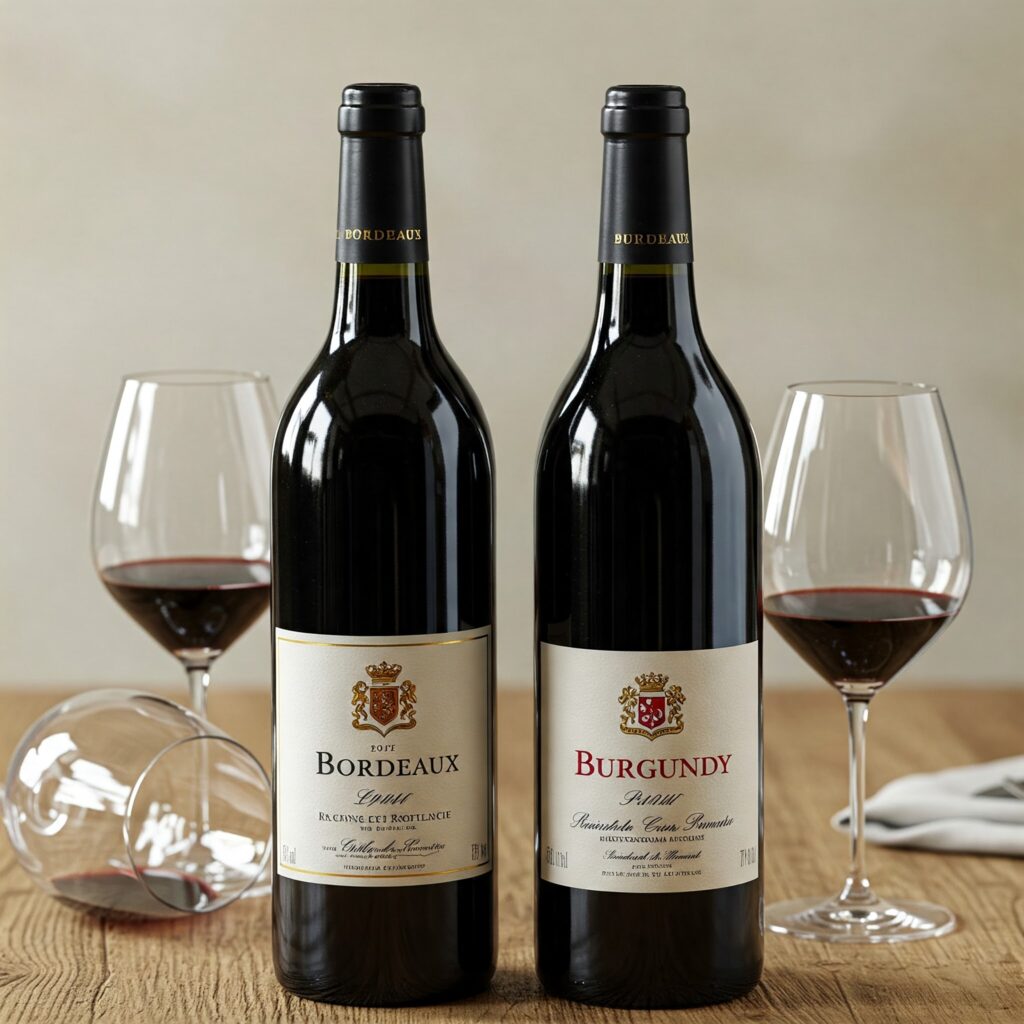
Burgundy vs Bordeaux wine: whats the difference?
When it comes to fine wine, few names evoke as much prestige and passion as Burgundy and Bordeaux. These two legendary French wine regions have shaped the world of viticulture for centuries, each carving out a distinctive identity that continues to captivate oenophiles around the globe. While both regions produce exceptional wines, their approaches to winemaking could not be more different—from the grapes they cultivate to the philosophies that guide their production.
Whether you're a seasoned collector or a curious newcomer to the world of fine wine, understanding the nuances between these iconic regions will enhance your appreciation and enjoyment of their liquid treasures. Join us as we uncork the fascinating distinctions that make Burgundy and Bordeaux unique yet equally compelling destinations for wine lovers.
The rivalry between Burgundy and Bordeaux spans centuries, with each region championing distinct approaches to winemaking. At their core, these differences can be summarized in a few essential contrasts:
Wine Philosophy: Burgundy celebrates terroir above all else, focusing on single vineyards and expressing the pure essence of place through predominantly single-varietal wines. Bordeaux, by contrast, embraces the art of blending multiple grape varieties to create balanced, complex wines that reflect both terroir and human craftsmanship.
Scale of Production: While Bordeaux operates on a grander scale with larger estates producing significant volumes, Burgundy consists of a patchwork of small family domains producing limited quantities of highly sought-after wines.
Wine Structure: Burgundian wines are known for their ethereal elegance, subtlety, and silky textures. Bordeaux wines typically offer more structure, power, and tannic backbone, designed for extended aging.
Classification Systems: Bordeaux follows a château-based classification system established in 1855 that ranks producers, while Burgundy's hierarchical system focuses on classifying specific vineyard plots based on their quality potential.
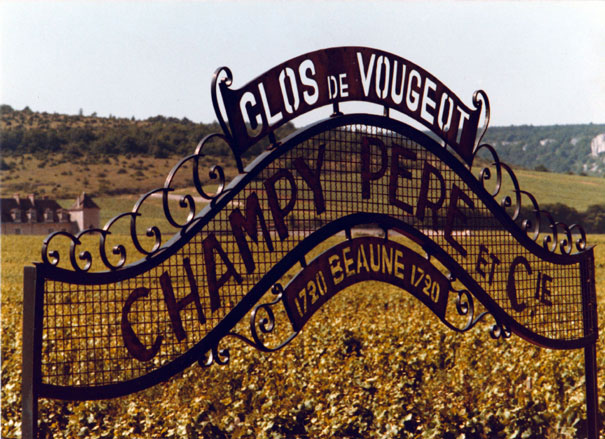
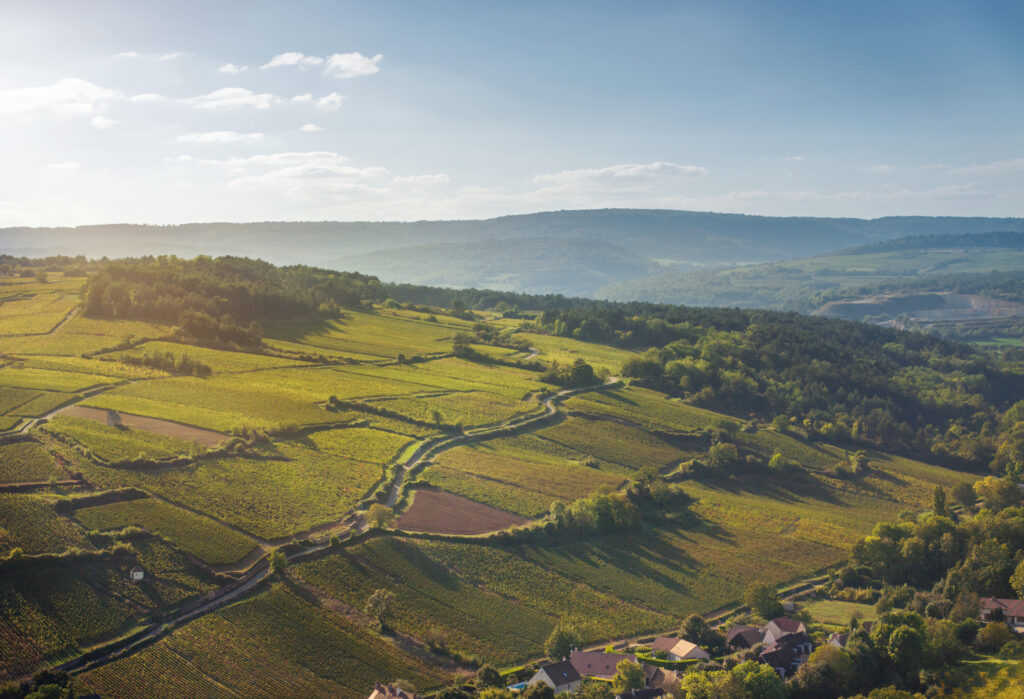
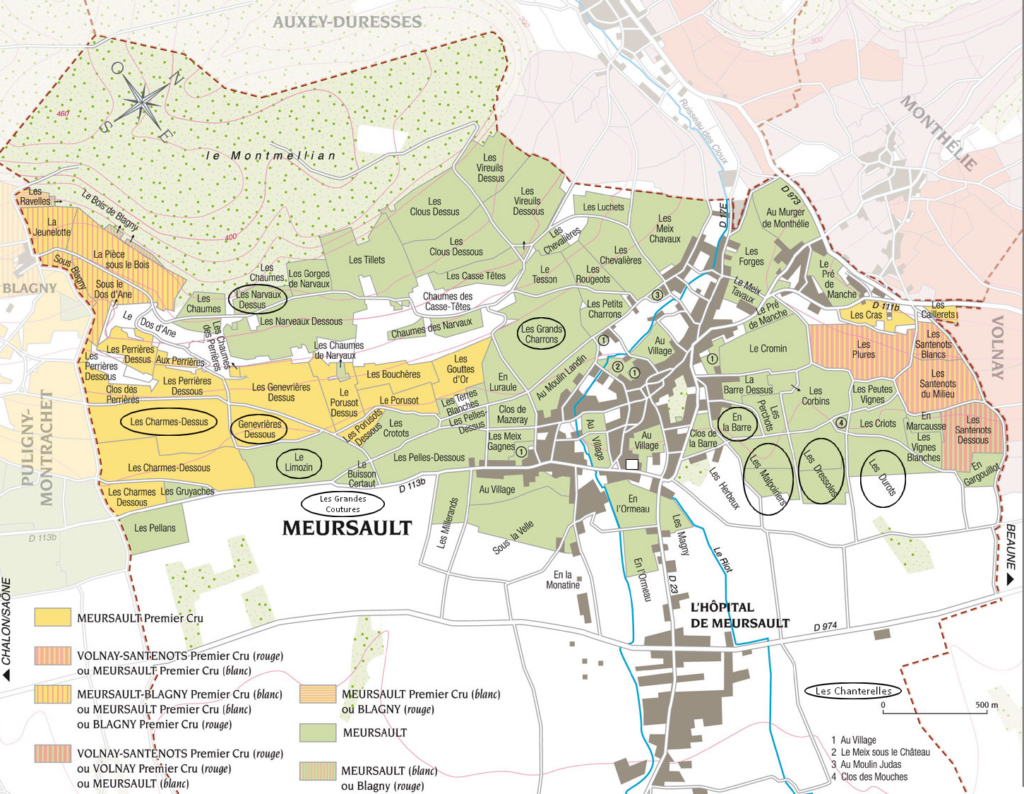
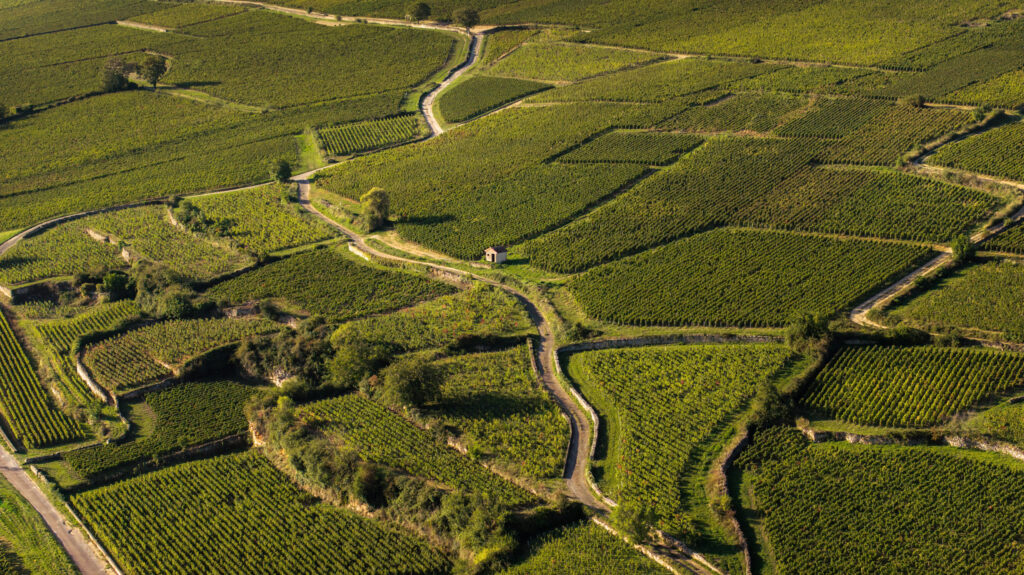
The concept of terroir—that magical combination of soil, climate, topography, and human influence—finds perhaps its purest expression in these two regions, albeit in dramatically different ways.
Burgundy's Terroir: Burgundy's narrow strip of vineyards along the eastern edge of France features a mosaic of microclimates and soil types, primarily limestone and clay in varying proportions. This incredible geological diversity can change dramatically within meters, explaining why adjacent vineyards often produce remarkably different wines. Burgundy's continental climate brings cold winters and warm summers, with spring frost presenting a constant threat to vine development.
The region's winemaking philosophy centers on allowing each tiny vineyard plot to express its distinctive character through minimal intervention. This meticulous focus on site-specificity has culminated in the identification of hundreds of individual climats (named vineyard sites), each with its own personality.
Bordeaux's Terroir: Spread across a much larger area in southwestern France, Bordeaux benefits from a maritime climate moderated by the Atlantic Ocean and the Gironde Estuary, which divides the region into Left Bank and Right Bank. The Left Bank features well-drained gravel soils perfect for Cabernet Sauvignon, while the Right Bank's clay and limestone soils favor Merlot.
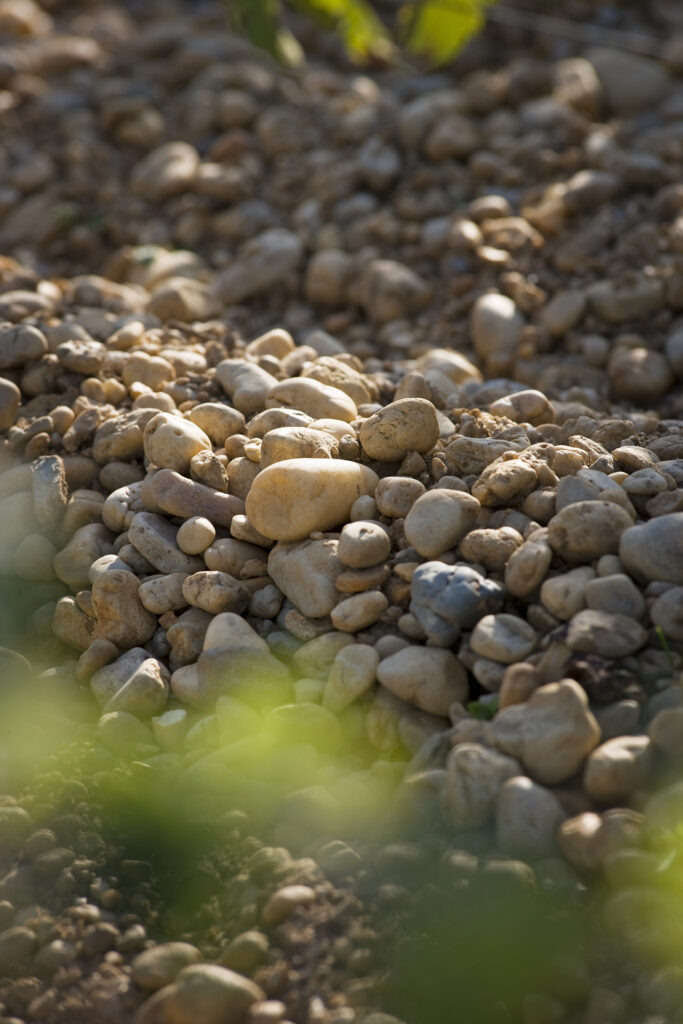
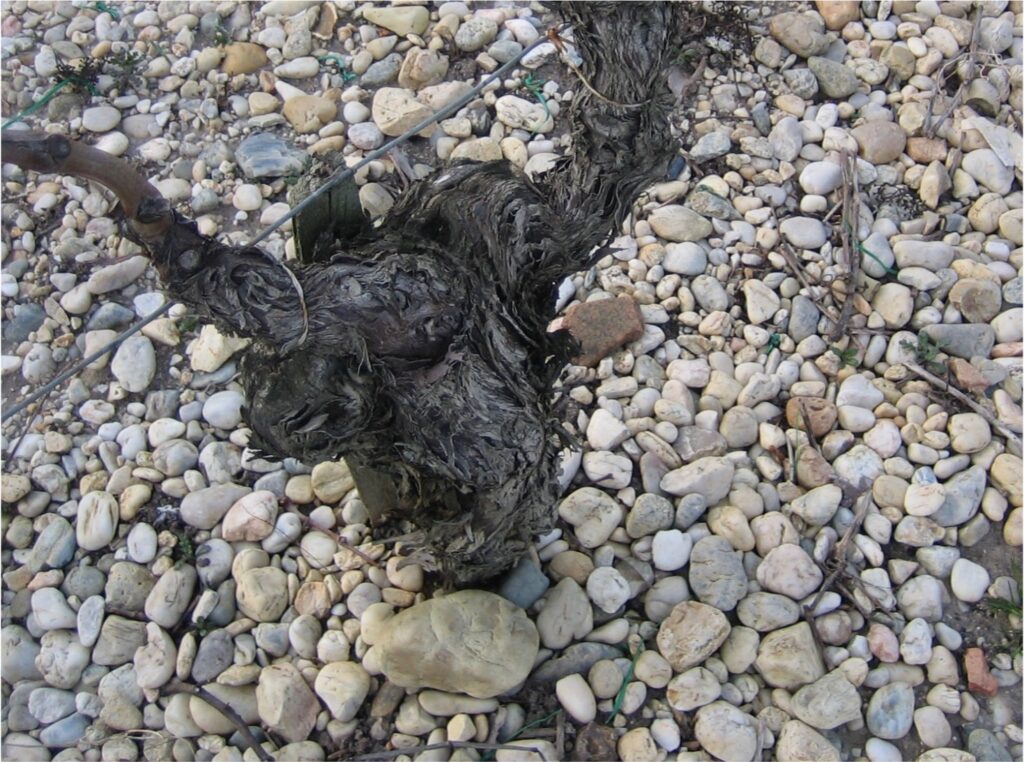
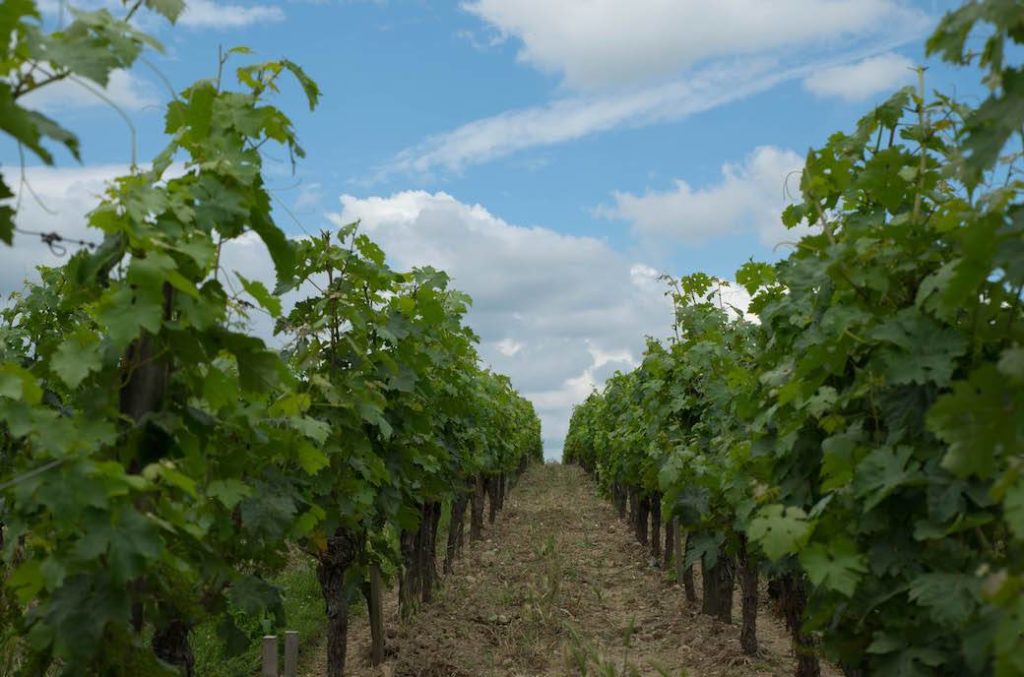
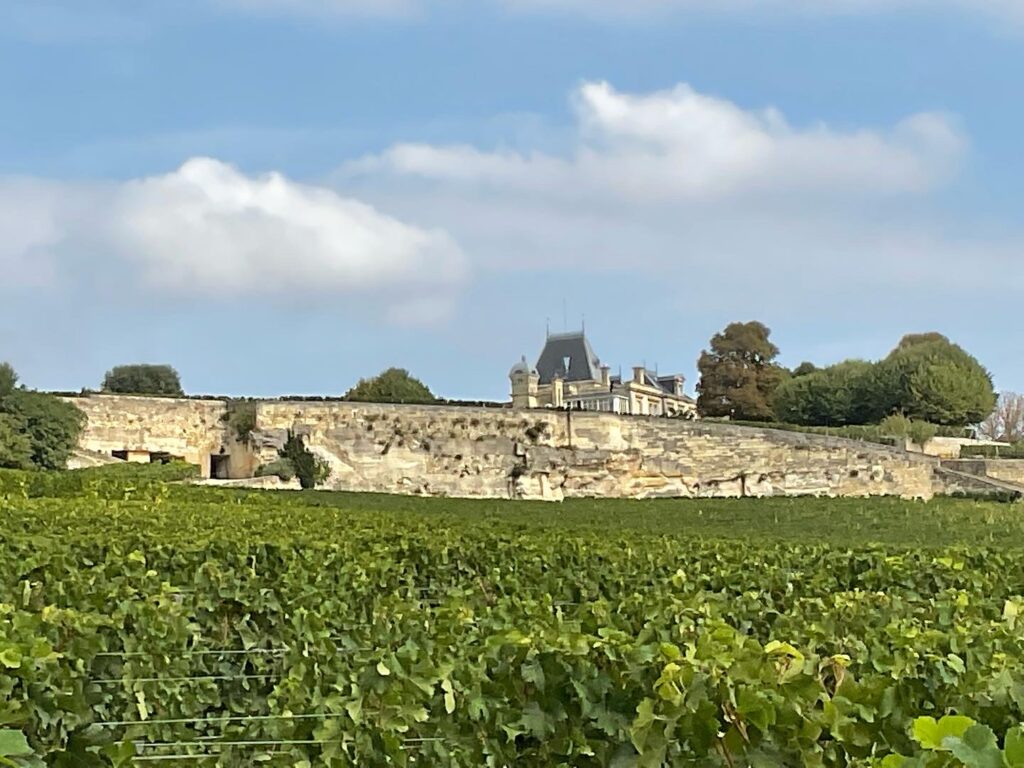
Rather than the extreme fragmentation seen in Burgundy, Bordeaux's terroir expression comes through larger appellations with more consistent characteristics. The region's château system, where estates control substantial vineyard holdings, allows for more consistent production levels and enables winemakers to craft balanced blends by selecting from various parcels.
Perhaps no contrast between these regions is more striking than their approach to grape varieties.
Burgundy's Grapes: Burgundy embraces radical simplicity, focusing almost exclusively on two grape varieties:
- Pinot Noir: The temperamental red grape that produces ethereal, silky wines with red fruit flavors, floral notes, and an ability to express terroir with unparalleled transparency.
- Chardonnay: The versatile white grape capable of producing everything from crisp, mineral-driven Chablis to rich, opulent wines from the Côte de Beaune.
This laser focus on two varieties allows Burgundian winemakers to become true specialists, dedicating generations to understanding how these grapes express each specific vineyard site.
Bordeaux's Grapes: Bordeaux thrives on the art of blending, primarily using five key varieties for red wines:
- Cabernet Sauvignon: Providing structure, tannin, and aging potential, particularly dominating Left Bank blends.
- Merlot: Contributing roundness, plushness, and accessibility, forming the backbone of Right Bank wines.
- Cabernet Franc: Adding aromatic complexity, finesse, and sometimes herbaceous notes.
- Petit Verdot: Bringing color, tannin, and spice notes in small proportions.
- Malbec: Historically important but now used sparingly for color and fruit.
For white wines, Bordeaux primarily uses:
- Sauvignon Blanc: Contributing freshness, acidity, and aromatic lift.
- Sémillon: Providing body, texture, and honeyed richness, especially in sweet Sauternes.
This diversity of grape varieties gives Bordeaux winemakers a broader palette from which to craft their wines, allowing them to adapt to vintage variations by adjusting their blends.
The contrast between these regions extends deeply into their production philosophies and structures.
Burgundy's production landscape reflects its historical fragmentation under Napoleonic inheritance laws, where vineyards were continually divided among heirs. Today, most Burgundian producers are small, family-owned operations, many farming just a few hectares spread across multiple vineyards. This small-scale approach necessitates hands-on viticulture and encourages meticulous attention to detail.
Production quantities are inherently limited, creating the scarcity that drives Burgundy's often astronomical prices. The winemaking typically emphasizes minimal intervention to preserve site expression, with judicious use of oak to complement rather than overpower the wine's natural character.
Bordeaux operates on a significantly larger scale, with estates often controlling dozens or even hundreds of hectares. The château system, where a single entity owns and manages substantial contiguous vineyards, allows for greater economies of scale and more consistent production volumes. Large, temperature-controlled cellars enable precise fermentation and aging, while dedicated sales teams manage global distribution networks.
This larger scale has historically made Bordeaux more accessible to consumers, though top-tier châteaux now command prices rivaling or exceeding Burgundy's finest offerings. The region's greater production capacity has also enabled it to establish a strong global presence, with Bordeaux often serving as many wine enthusiasts' introduction to fine French wine.
The classification systems employed by these regions reveal fundamentally different philosophies about what constitutes wine quality.
Bordeaux's Classification: Bordeaux's most famous classification system, established for the 1855 Paris Exhibition, ranked châteaux from the Médoc region into five growths or "crus" based primarily on their market prices and reputations at that time. This producer-based system essentially classified the estates themselves rather than specific vineyard sites. With few exceptions (most notably Château Mouton Rothschild's promotion to First Growth in 1973), this classification has remained largely unchanged for over 165 years.
Other Bordeaux sub-regions like Saint-Émilion have established their own classification systems with periodic revisions. These classifications have become powerful marketing tools that significantly influence wine pricing and global perception.
Burgundy's Classification: Burgundy's four-tiered hierarchy, formalized in the mid-20th century but based on centuries of observation, focuses entirely on specific vineyard sites rather than producers:
1. Grand Cru: The pinnacle of quality, representing just 2% of production from exceptionally situated vineyards.
2. Premier Cru: Outstanding vineyards comprising about 12% of production.
3. Village: Wines from specific communes, making up approximately 36% of production.
4. Regional: Basic wines from the broader Burgundy region.
This means that multiple producers can make wine from the same classified vineyard, with quality varying based on each winemaker's skill and approach. The emphasis remains firmly on the land itself rather than who owns it, reflecting Burgundy's belief that great wine begins with great terroir.
While both regions produce exceptional wines, their sensory profiles differ dramatically, offering wine lovers distinct pleasures.
Burgundian wines are often described as ethereal and sensual, prized for their aromatic complexity, silky textures, and ability to transmit terroir with remarkable transparency. Their moderate alcohol levels and balanced acidity make them exceptionally food-friendly and approachable in their youth, though the finest examples can age gracefully for decades.
Bordeaux wines, particularly from top châteaux, are typically more structured and powerful, with firm tannins that require time to soften. They often display greater uniformity within their appellations but can show tremendous complexity as they age, gradually revealing layers of secondary and tertiary aromas beyond their initial fruit-forward profiles.
Both regions produce wines with exceptional aging potential, though through different mechanisms. Burgundy's longevity stems from its perfect balance and concentrated fruit essence, while Bordeaux's ageability comes from its structured tannins and higher acidity.
Red Burgundy (Pinot Noir) offers an intoxicating aromatic profile that can include red cherries, wild strawberries, raspberries, and cranberries in youth, developing more complex notes of forest floor, mushrooms, game, and dried flowers with age. The mouthfeel is typically silky and refined, with bright acidity and fine-grained tannins that provide structure without aggressive grip.
Regional differences are pronounced, with Côte de Nuits generally producing more structured, powerful wines, and Côte de Beaune offering more aromatic, delicate expressions. Within these sub-regions, each village and vineyard imparts its distinctive character—Gevrey-Chambertin's wines tend toward muscularity and earthiness, while Chambolle-Musigny offers ethereal perfume and silky textures.
White Burgundy (Chardonnay) ranges dramatically in style from the steely, mineral-driven wines of Chablis to the rich, opulent expressions from Meursault and Puligny-Montrachet. Aroma profiles can include citrus fruits, green apples, and white flowers in cooler regions, trending toward riper stone fruits, honey, and hazelnut notes in warmer sites. Oak influence varies widely, from the unoaked purity of Chablis to the judicious barrel aging of Côte de Beaune whites.
The finest white Burgundies combine richness with precision, offering complex interplays between fruit intensity, mineral tension, and textural depth. As they age, they develop captivating notes of brioche, mushroom, and beeswax while maintaining vibrant acidity.
Red Bordeaux displays distinct characteristics depending on its bank of origin and blend composition. Left Bank wines, dominated by Cabernet Sauvignon, typically show firmer structure and notes of blackcurrant, cedar, graphite, and tobacco. Right Bank wines, led by Merlot, offer more immediate plushness with plum, chocolate, and truffle aromas.
Young Bordeaux often presents robust tannins and primary fruit flavors that require time to integrate and develop. With proper aging, these wines evolve magnificently, developing complex bouquets of leather, cigar box, dried fruits, and earthy undertones while maintaining remarkable freshness. The best examples can improve for decades, sometimes a century or more.
White Bordeaux, comprising primarily Sauvignon Blanc and Sémillon, can range from crisp, herbaceous styles to rich, honeyed expressions, particularly in sweet Sauternes. Dry whites offer citrus, gooseberry, and sometimes tropical fruit notes, often with subtle smokiness from oak aging. Sweet Bordeaux presents a luxurious profile of apricot, honey, marmalade, and botrytis-induced complexity.
Selecting between these two great regions often comes down to personal preference and the specific occasion:
Choose Burgundy if you:
- Appreciate subtlety, elegance, and nuance over power
- Enjoy wines that express a specific place with minimal winemaker intervention
- Prefer single-varietal wines that showcase the pure essence of Pinot Noir or Chardonnay
- Are seeking wines with silky textures and ethereal aromatics
Choose Bordeaux if you:
- Prefer more structured, powerful wines with firm tannins
- Appreciate the artistry of blending multiple grape varieties
- Enjoy wines that develop slowly and reward patience
- Are looking for more consistent styles within price categories
Of course, the true wine lover need not choose exclusively between these regions—each offers unique pleasures that complement rather than compete with one another.
Both regions produce exceptionally food-friendly wines, though their ideal pairings differ based on their inherent characteristics.
Burgundy's Food Affinities: The bright acidity and moderate tannins of red Burgundy make these wines remarkably versatile companions at the table. They pair beautifully with poultry (the classic coq au vin), game birds, mushroom dishes, and salmon. Their elegance complements rather than overwhelms delicate flavors.
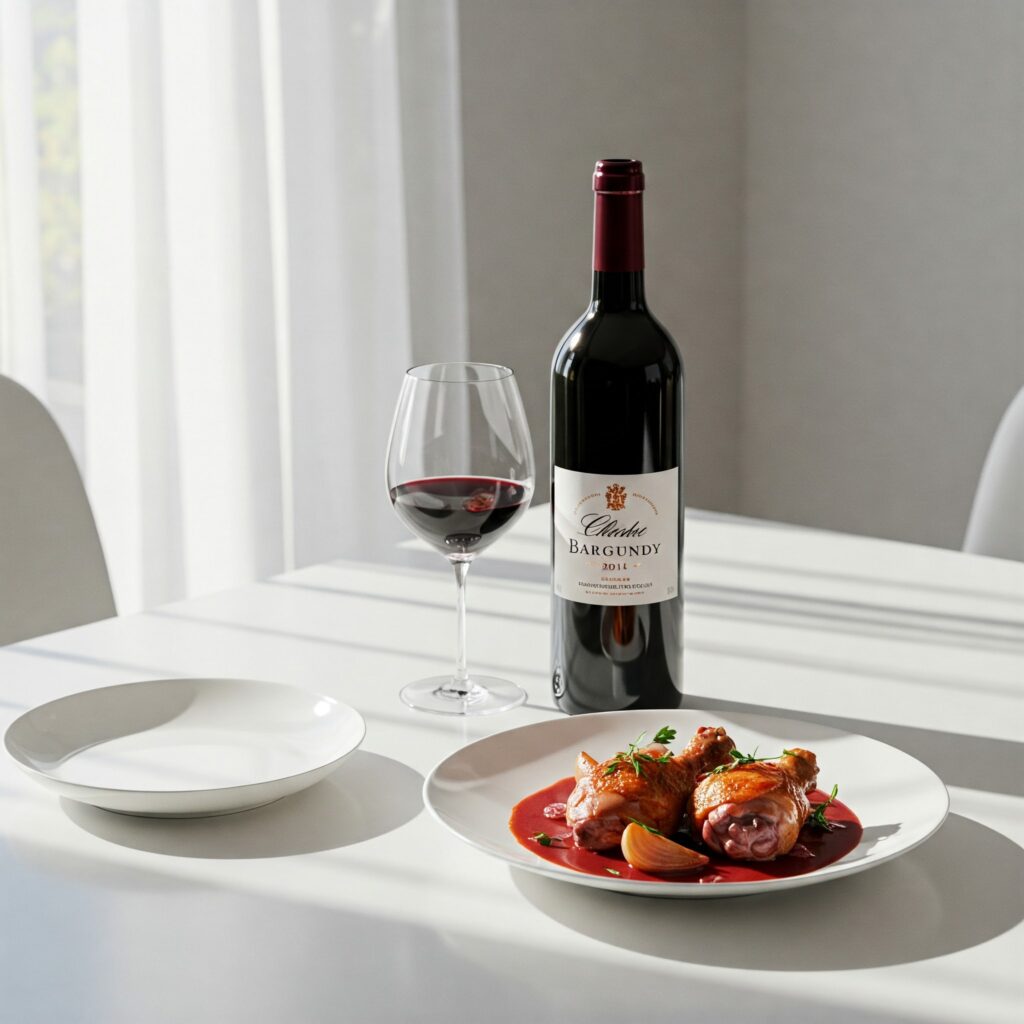
White Burgundy shines alongside seafood, from the classic pairing of Chablis with oysters to richer whites that complement lobster and creamy sauces. The wines' combination of acidity and body makes them ideal partners for a wide range of cuisines, from traditional French to modern Asian fusion.
Bordeaux's Food Affinities: Red Bordeaux's structure and robust tannins call for proteins and fats that can stand up to its powerful profile. Classic pairings include lamb, beef (particularly aged steaks), venison, and hard cheeses. The wines' firm structure helps cut through rich, fatty dishes.
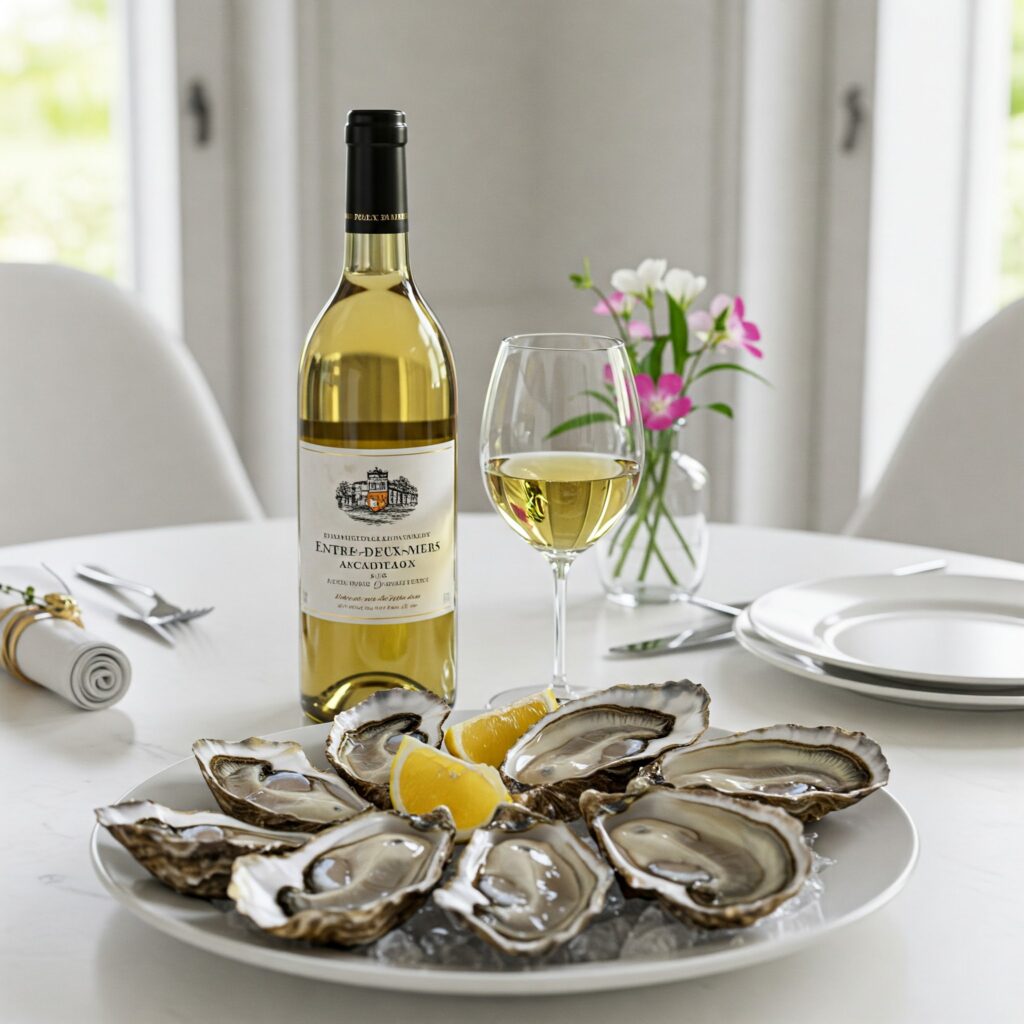
White Bordeaux pairs wonderfully with seafood, particularly when prepared with herbs or in butter sauces. Sweet Sauternes creates magical combinations with foie gras, blue cheeses like Roquefort, and fruit-based desserts. Keep it local with oysters coming from the bay of Arcachon and an crisp Entre-deux-Mers white wine.
Visiting these regions offers distinct yet equally rewarding experiences for the wine traveler, each reflecting the character of their wines and traditions.
Burgundy welcomes visitors with a tapestry of picturesque villages, ancient stone walls, and a palpable sense of history etched into the landscape. The region's charm lies in its intimate scale and refined aesthetic, with narrow country roads winding through the famous Côte d'Or ("Golden Slope") that houses some of the world's most coveted vineyard land.
A typical Burgundy visit centers around small, family-run domaines where tastings often take place in centuries-old cellars with the winemakers themselves. These boutique experiences offer rare insights into traditional winemaking methods and the meticulous attention to detail that defines Burgundian viticulture.
The medieval town of Beaune, with its iconic Hospices de Beaune and vibrant Saturday market, serves as the region's cultural heart. Nearby villages like Gevrey-Chambertin, Vosne-Romanée, and Puligny-Montrachet—names revered by wine lovers worldwide—invite leisurely exploration with their timeless stone buildings and surrounding vineyards.
Dining in Burgundy emphasizes local, seasonal ingredients prepared with classic techniques that highlight rather than overwhelm the region's refined wines. From casual bistros serving perfect coq au vin to Michelin-starred establishments offering contemporary interpretations of Burgundian cuisine, the food scene complements the wine culture perfectly.
Bordeaux offers a more majestic wine tourism experience, centered around impressive châteaux that dot the landscape like architectural jewels. These iconic estates, project the power and global influence that has defined Bordeaux for centuries.
Visits to premier Bordeaux estates often include tours of state-of-the-art winemaking facilities, historic barrel rooms, and carefully curated tasting experiences that showcase vertical vintages. The scale is grander, the presentation more polished, reflecting Bordeaux's long history of international trade and sophisticated marketing. Bordeaux has been receiving visitors far longer than Burgundy and their hospitality sections are well oiled machines today.
The city of Bordeaux itself has undergone a remarkable renaissance in recent decades, transforming from a somewhat sleepy port into a vibrant cultural destination. Its UNESCO-listed center features elegant 18th-century architecture, world-class museums, and a sophisticated dining scene that rivals Paris. The spectacular La Cité du Vin wine museum offers an immersive introduction to wine culture from around the world. With their state of the art tram system, getting around the town is simple. Bicycles can be rented and dropped off anywhere in town and walking around the center is a very safe option.
The surrounding wine regions, from the prestigious Médoc peninsula with its powerful Cabernet-based wines to the charming medieval town of Saint-Émilion with its limestone caves and cobblestone streets, provide diverse experiences for visitors. Each wine region takes a minimun of 45 minutes to an hour to reach from Bordeaux city center. Luxury accommodations, including châteaux-turned-hotels and bed and breakfasts, offer opulent bases for exploring this prestigious wine region.
At Decanter Tours, we understand that truly experiencing these legendary wine regions requires insider knowledge and exclusive access that goes beyond standard tourist routes. Our bespoke wine journeys in Burgundy and Bordeaux are crafted to reveal the soul of these regions through immersive, authentic experiences.
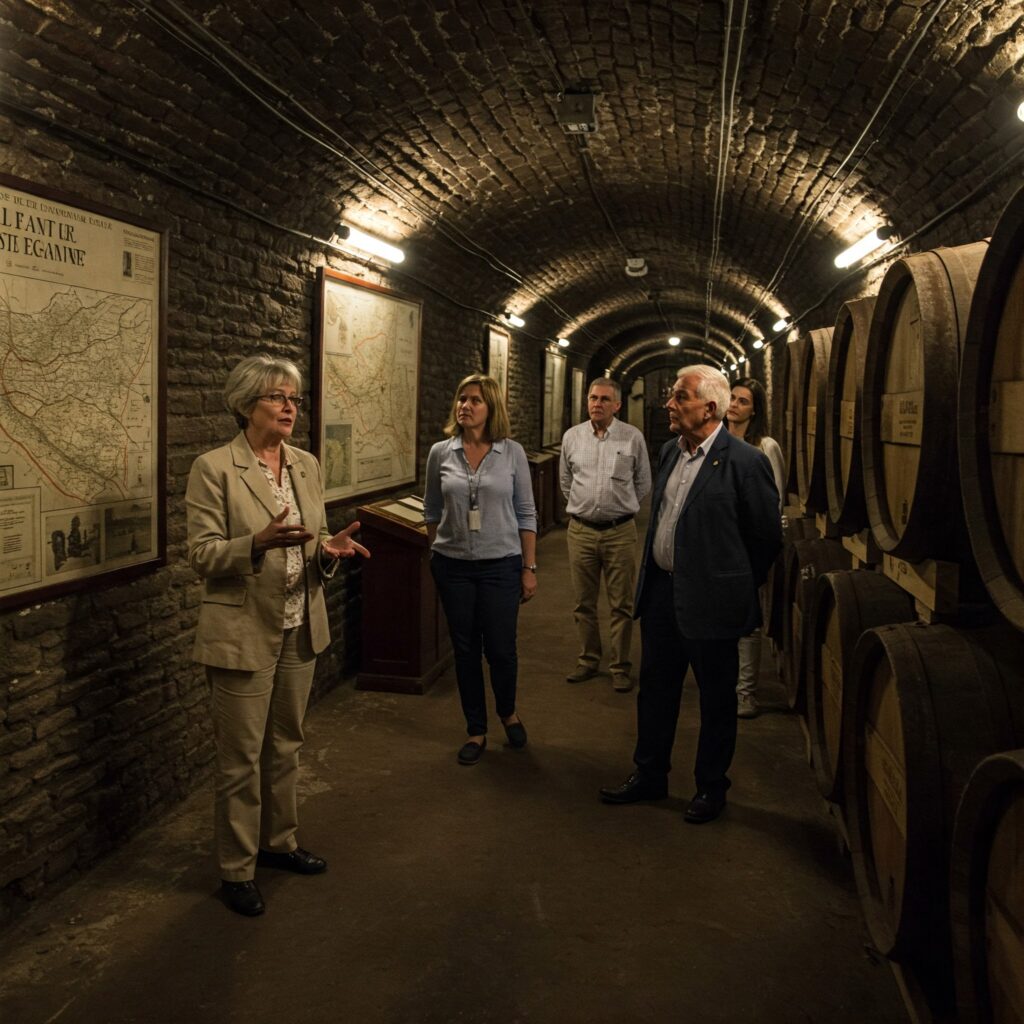
Our deep-rooted relationships with prestigious domains and châteaux open doors typically closed to the public, allowing our guests to taste rare vintages and meet the visionaries behind the wines. In Burgundy, this might mean a private tasting with a fifth-generation winemaker in their family cellar or a private wine and war focused visit: explore the historic cellars connected to the Hospices de Beaune via secret tunnels, once used by owners seeking refuge during WWII.
In Bordeaux, we provide unprecedented access to classified growth châteaux, including behind-the-scenes tours of their state-of-the-art facilities and vertical tastings of exceptional vintages, wine and food pairings and comparative tastings. Our expertly guided explorations of both regions balance iconic estates with hidden gems, ensuring a comprehensive understanding of each region's unique character.
Decanter Tours' luxury experiences extend beyond wine to encompass the finest regional gastronomy, from intimate dinners at Michelin-starred restaurants to cooking classes with celebrated local chefs. Our carefully selected accommodations—whether boutique hotels in historic Beaune or luxurious château stays in Bordeaux—provide the perfect complement to days spent exploring vineyards.
Most importantly, our knowledgeable guides bring these experiences to life with contextual insights that deepen your appreciation of every wine you taste and every landscape you traverse. Whether you're a seasoned collector or an enthusiastic newcomer, Decanter Tours crafts journeys that will forever enhance your understanding and enjoyment of these incomparable wine regions.
Contact us today for your Bordeaux to Burgundy experience.
This age-old debate has no definitive answer, as "better" depends entirely on personal preference. Burgundy produces ethereal, terroir-expressive Pinot Noir wines valued for their aromatic complexity and silky textures. Bordeaux creates more structured, powerful blends (primarily Cabernet Sauvignon and Merlot) prized for their aging potential and consistent quality. Rather than declaring one superior, wine enthusiasts should explore both regions to discover which style resonates more with their individual palate.
While both regions produce wines across various price points, Burgundy's top wines have generally reached higher price levels in recent years due to extremely limited production and growing global demand. The fragmented nature of Burgundy's vineyards, where top producers might make just a few barrels of their finest wines, creates scarcity that drives prices upward. Bordeaux produces larger quantities, even of its most prestigious wines, though First Growth Bordeaux and other top châteaux still command very significant prices. For everyday drinking, both regions offer excellent options at more accessible price points through lesser-known producers and entry-level appellations.
While geographically separated by about 500 kilometers (310 miles), it is certainly possible to experience both Burgundy and Bordeaux in a single trip with proper planning. A high-speed train connects Paris to Dijon (Burgundy) in about 1.5 hours and Paris to Bordeaux in about 2 hours. Alternatively, a direct flight from Lyon (near Burgundy) to Bordeaux takes approximately one hour. Decanter Tours specializes in creating seamless multi-region itineraries that maximize your time in the vineyards rather than in transit, allowing you to compare and contrast these iconic wine destinations in a single luxurious journey. We recommend allowing at least three days in each region to truly absorb their distinctive characters and experience their diverse appellations.

Experience the finest private wine tours in Bordeaux and beyond. With over 20 years of expertise, we craft tailor-made wine journeys to iconic regions like Médoc, Saint-Émilion, Burgundy, and Champagne. Explore exclusive chateaux with expert guides and seamless planning for a truly unforgettable experience.